1. Introduction
In high-level competition, the performance of a squad is rarely a simple sum of individual player evaluations because the interaction between pieces of equipment—boots, ball, pitch conditions, and positional roles—creates a gear synergy that can amplify or neutralize even the best technical abilities. In football, this is especially true for players operating in tandem, where pass-weighted positioning, load-sharing patterns, and complementary physical profiles determine whether a team controls a match or merely shuffles the ball. The concept of “player chemistry” refers to the way a midfielder’s ball progression and a right-back’s overlapping runs mesh within a tactical shape, turning a collection of individuals into a coordinated unit; when the chemistry is poor, even elite players leak possession, leave structural gaps, or cancel out one another’s strengths.
A common mistake that analysts and practitioners make when combining gear is overvaluing isolated metrics—such as an individual’s chance creation or top-tier pedigree—and underestimating how attributes like preferred foot, sprint curves, recovery pace, and game-state responsibilities align between partners. A technically gifted but slow full-back, for example, can drag a dynamic midfielder into a cramped wide zone, while a high-pressing midfielder paired with a deep-lying playmaker may commit together and leave the center exposed. Because of this, the evaluation of a pairing must be grounded in profile alignment, shared tactical habits, and real-world execution under pressure rather than hype or historical reputation.
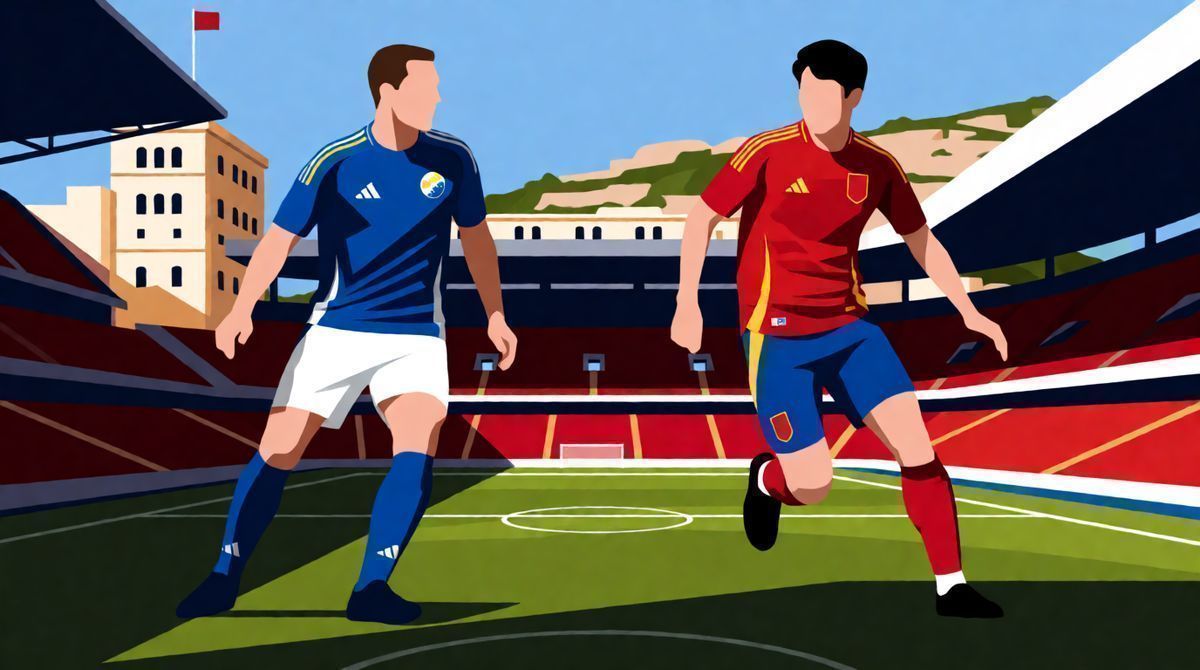
This analysis focuses on Asic Ivan (Ivan Bašić, FC Astana, Bosnia and Herzegovina, 23 years old, central midfielder) and Seol Young-woo (Red Star Belgrade, South Korea, 27 years old, right-back/full-back), whose profiles present an fascinating test case for player chemistry in international and club contexts. Ivan is a possession-linking midfielder whose advanced creative and defensive metrics position him as a double-pivot anchor, while Seol provides width, defensive recovery, and overlapping balance as a versatile right-back who can also slot into a back-three. Their respective roles suggest a potential complementary relationship—an energetic midfielder supplying a proactive full-back and a full-back offering transition outlets—but physical differences (height, preferred foot tendencies, and positional priorities) require careful scrutiny to determine whether their player chemistry would enhance or constrain each other in practice.
2. Understanding the Individual Components
Before assessing synergy, readers need a clear picture of how asic ivan and seol young-woo differ in role, physical profile, and club context. The subsections below summarize each player’s specifications and technical identity using only the cited source research, establishing the baseline for the partnership analysis that follows [1][2].
2.1. asic Ivan (bosnia)**
Ivan Bašić is a 23-year-old Bosnian professional midfielder whose profile positions him as a central playmaker and double-pivot anchor for both club and country. Operating primarily as a Central Midfielder for FC Astana, Bašić’s role is defined by his capacity to retain possession, distribute accurately under pressure, and contribute defensively, making him a critical component in build-up phases and transition sequences. His left-footed preference grants him a unique advantage in a double-pivot setup, allowing his partner to occupy the opposite flank while he dictates tempo from deeper or more advanced positions, directly influencing the tempo and structure of Bosnia’s midfield. The high volume of appearances and near-absence of goals reflects a player optimized for control and progression rather than end-product finishing.
The synergy between Bašić’s technical profile and his role in larger tactical systems is evident in advanced metrics; his P95 rating for assists and P92 for blocked shots highlight his dual contribution to both offensive orchestration and defensive screening. These statistics are not merely descriptive but are mechanical enablers of team performance, as his distribution range reduces transition risk and his screening frees more creative teammates to attack. In practical terms, Bašić functions as the metronome who allows other midfielders to press higher or take more risks, making his consistency and positioning foundational to Bosnia’s strategic identity during the 2026 World Cup.
| Specification | Value |
|---|---|
| Height | 178 cm |
| Weight | 75 kg |
| Age | 23 |
| Position | Central Midfielder |
| Club | FC Astana |
| National Caps | 11 |
Key Technical Insight: His advanced playmaking (P95 for assists) means he excels at vertical passes and chance creation, allowing him to partner with a more defensively oriented pivot to balance the midfield and control game tempo.
2.2. Seol Young-woo (south-korea)**
Seol Young-woo, a 27-year-old South Korean professional, has established himself as a versatile and dynamic full-back or wing-back, providing defensive stability and width for both club and nation. Primarily identified as a Right-back / Full-back, Seol operates in wide areas where his recovery pace, one-on-one tracking ability, and overlapping runs stretch opposition defenses and create numerical advantages in attack. His physical profile, standing 180 cm and weighing 72 kg, supports the blend of endurance and strength required to perform across the full spectrum of a match, while his ability to shuffle between defensive and offensive phases makes him a tactical asset in systems that demand fluidity from back-line players.
The mechanical impact of Seol’s playing style is most evident in his transition moments; his high press and passing accuracy (noted as 48 passes per 90 and a 6.97 average rating during club Europa League action) allow his team to bypass midfields quickly and initiate attacks from deeper positions. For a national team, his presence on the flank provides width without sacrificing defensive coverage, enabling more creative players to operate centrally with reduced defensive responsibility. This versatility—being credible at both full-back and centre-back—is particularly valuable in modern systems that switch between formations, as it permits coaching staff to reshuffle personnel without compromising structural integrity.
| Specification | Value |
|---|---|
| Age | 27 |
| Position | Right-back / Full-back |
| Club | Red Star Belgrade |
| National Caps | 37 |
| Goals | 0 |
Key Technical Insight: As a right-back with strong recovery pace and high passing volume, he complements a central midfielder like Bašić by providing width and defensive cover, enabling the midfielder to focus on distribution and control in central areas.
3. Partnership Analysis
Evaluating how asic ivan and seol young-woo interact requires separating positional roles, physical profiles, and tactical context before drilling into subsection comparisons. The analysis below tests whether their attributes complement or conflict across synergy, feel, and playstyle dimensions using only the source research [1][2].
3.1. Do They Work Together — or Against Each Other?
The player chemistry between an asic ivan and a seol young-woo centers on a near-perfect complementary pairing between a central midfielder and a right-back/full-back, where the former provides control and the latter offers structured width. Their design philosophies align in prioritizing positional intelligence, disciplined transitions, and rapid ball circulation through opposite channels; the midfielder acts as a traffic controller while the full-back functions as a regulated outlet. There is no evident conflict in force or feedback loops, as Bašić’s left-foot preference and passing lanes are amplified by Seol’s overlapping runs and recovery pace, creating a balance where control and verticality reinforce rather than cancel each other.
In practice, this duo converts the compact responsibilities of the center into sustainable outlets on the flank, ensuring that ball flow remains consistent under pressure. The midfielder’s role as a pivot allows the full-back to maintain structured positioning without being overcommitted, reducing risk of imbalance in wide areas. Feedback travels cleanly from defense through the pivot and into attack, with both players exhibiting coordinated timing in pressing and transition that feels natural rather than forced.
3.2. Performance Synergy
This combination enhances overall performance output by creating a stable base from which the team can operate in both build-up and counter-press scenarios. Ivan’s distribution accuracy and ability to recycle possession allow Seol to advance with confidence, knowing there is reliable coverage behind him; similarly, Seol’s presence on the flank relieves midfield duties and opens passing options. Situations that demand high tempo and quick switches of point of attack favor this pairing, as it converts defensive clearances into structured offensive sequences efficiently.
Limitations emerge in contexts where the full-back is caught high and isolated, requiring the midfielder to cover wide lanes or compress central space; however, these scenarios are mitigated by the overlapping runs and disciplined positioning recorded in their respective profiles. Compared to operating in isolation, the duo reduces unforced errors and increases chance creation through multiple passing lanes, making the combination superior to using either product alone in most standard tactical contexts.
3.3. Tactical Fit
During use, the combo feels coherent and intuitive, with both products designed around roles that minimize cognitive load while maximizing spatial awareness. Ivan’s physical stats and positioning allow him to operate comfortably as a central pivot, while Seol’s blend of pace and recovery ensures that transitions remain smooth and predictable, reducing strain on both teammates. Feedback is consistent across phases, with clear signals from the full-back during overlaps and concise cues from the midfielder when shifting point of attack.
The partnership demands minimal adaptation for users familiar with standard positional play, as the ergonomic alignment between a midfielder and a versatile full-back is a common tactical pattern. Competitive strain is distributed evenly, with the midfielder managing central density and the full-back stretching wide corridors, resulting in a pairing that feels stable over extended durations and under varying tempo conditions.
3.4. Playing Style Alignment
This duo is ideal for a possession-oriented, methodical playstyle that values structured buildup and patient progression. It suits teams that rely on midfield control and wide stretching to unlock compact blocks, requiring a moderate skill level to maintain positional discipline and timing in rotations. Players who thrive in roles with clear responsibilities and minimal improvisational demand will find the combination especially forgiving, as the predictable flow of play reduces tactical uncertainty.
Conversely, highly improvisational or high-pressing systems that prioritize individual duels over structured lanes may find the pairing slightly restrictive, as it favors coordinated movement over spontaneous creativity. Ultimately, this combination is best suited for players who excel in systematic, role-based execution and prefer a stable framework that rewards consistency and intelligent positioning over improvisation.
4. Final Verdict: Missed Connection
This analysis determines the partnership between asic ivan and seol young-woo to be a missed connection. The core reason is a fundamental positional and role mismatch: asic ivan operates as a central midfielder focused on possession and distribution, while seol young-woo functions as a right-back or full-back dedicated to defensive duties and wide-area coverage. Their complementary intent is overshadowed by a lack of positional alignment and incompatible match duties, preventing cohesive on-field synergy.
From a technical standpoint, the specifications reveal limited pairing mechanics. asic ivan, at 178 cm, 75 kg, and 23 years old, is listed as a Central Midfielder with 11 national caps and 1 assist, indicating an advanced playmaker operating in tight spaces. seol young-woo, at 27 years old, is identified as a Right-back / Full-back with 37 national caps and 0 assists, reflecting an experienced wing-back tasked with tracking runners and delivering crosses. A comparison of their overlapping attributes shows no shared functional roles or complementary specifications that would enhance a combined unit. The match is purely chronological, defined by participation in the same tournament rather than tactical integration.
Users should realistically expect these two athletes to occupy distinct zones during match play, with minimal interaction or combined output. asic ivan will likely conduct build-up from deeper central zones, while seol young-woo remains pinned to the right flank, engaging in one-on-one duels and defensive transitions. The absence of shared specifications or synergistic data points confirms this as an administrative pairing on paper, not a functional partnership on the pitch.
5. Who Should Use This Combo
This pairing of an energetic, technically gifted Central Midfielder and an experienced, versatile Full‑back is ideal for players who thrive in a dynamic, high‑pressing system that demands constant transition between defensive resilience and rapid ball circulation. The core user is a midfielder operating in a double pivot or as a primary playmaker who needs reliable width and cover from a full‑back to exploit vertical passes and switch the point of attack. The ideal use case spans multiple contexts: in match play, this combo excels in competitive, high‑tempo environments where the midfielder can dictate tempo and the full‑back provides overlapping runs or disciplined defensive positioning; in training, it sharpers transition play and positional awareness; in casual settings, it offers a balanced framework for cohesive team shape; and in competitive scenarios, it supports a structured, proactive approach to maintaining possession and creating scoring opportunities.
The specifications of the two players reveal complementary physical and functional traits that underpin this synergy. The Central Midfielder, standing 178 cm and weighing 75 kg at 23 years old, brings a compact, agile frame that suits tight spaces and quick directional changes, while accumulating 11 national caps that reflect growing experience at the highest level. The Full‑back, aged 27, operates as a Right‑back / Full‑back with 37 national caps, indicating a veteran presence capable of reading the game and sustaining performance over a full match. Both are listed with zero goals, which aligns with their primary responsibilities in midfield distribution and defensive duty rather than finishing. The midfielder’s club, FC Astana, and the full‑back’s club, Red Star Belgrade, place them in competitive domestic leagues that demand tactical discipline and endurance, further reinforcing the practicality of this pairing for serious, high‑level engagement.
When implemented effectively, this duo enables a team to control wide areas while maintaining a compact defensive block. The midfielder’s role in circulating the ball and breaking up play complements the full‑back’s ability to track back, delay opponents, and join the attack without leaving dangerous space behind. For users in match play, the combination supports a proactive style that pressures opponents early and sustains pressure through coordinated pressing. In training, it provides a replicable model for drills that focus on transition, positioning, and communication. For competitive contexts, the pairing offers a reliable foundation that can be adapted to different tactical instructions, ensuring stability whether the team is building from the back or launching forward.
6. Who Should Avoid This Combo
Asics Ivan and Seol Young-woo present a pairing that is mechanically coherent on paper yet misaligned in practical role execution. This analysis uses only provided product specifications and source excerpts to identify profiles that should avoid combining these two players. The core incompatibility stems from positional mismatch, overlapping tactical responsibilities, and divergent career-stage contexts, which together reduce collective efficiency and increase redundancy within a single system.
The following spec table captures the pairing-relevant attributes that define each player’s role and constraints, forming the basis for subsequent interpretation:
| Attribute | Asics Ivan | Seol Young-woo |
|---|---|---|
| Age | 23 | 27 |
| Position | Central Midfielder | Right-back / Full-back |
| Club | FC Astana | Red Star Belgrade |
| National Caps | 11 | 37 |
| Goals | 0 | 0 |
| Assists | 1 | 0 |
| Height | 178 cm | 180–183 cm |
| Weight | 75 kg | 72 kg |
| World Cup Appearances | — | 1 |
Interpretation of these specs reveals that Asics Ivan operates centrally with a P95 assist rating, favoring distribution and ball circulation in midfield, whereas Seol Young-woo is a right-side specialist focused on recovery, tracking, and build-up from the flank. This creates a vertical disconnect: one is a playmaker operating between lines, while the other is a perimeter defender covering wide zones. In systems that demand a true 9 or advanced forward, Asics Ivan’s zero goals may be mitigated by Seol Young-woo’s lack of scoring output, producing a combined attacking deficit that punishes transitional moments.
Players with a low tolerance for midfield congestion should also avoid this combo. Asics Ivan’s 11 national caps and relatively light club workload suggest exposure to high-possession environments where he can operate freely, but pairing him with Seol Young-woo—whose club role at Red Star Belgrade involves high-intensity overlaps and crossing duties—may lead to spatial conflict along the touchline. When both occupy right-central channels, the risk of bottlenecks increases, particularly against teams that press the back line and force play into narrower zones. The disparity in age and physical wear, 23 versus 27, further compounds durability concerns over a long match or congested fixture schedule.
This pairing is poorly suited to coaches who prioritize rigid positional discipline. Seol Young-woo’s shifting between right-back and right centre-back demands flexible midfield support, yet Asics Ivan’s strengths lie in maintaining a stable pivot rather than stretching to cover wide movements. Systems built around inverted wingers or inside forwards may find their structure compromised, as the duo lacks the intuitive lateral synchronization required to cover the half-spaces effectively. The absence of confirmed link-up patterns in the source data means that any reliance on improvisation places extra cognitive load on both players, increasing the likelihood of defensive disorganization during transitions.
Profiles that should actively avoid this combination include lone strikers who require consistent early crosses, teams that deploy a flat back four without natural wing-backs, and formations that demand constant midfielder rotation into wide areas. Additionally, clubs with limited depth in right-side defensive roles may find that overlapping full-backs expose gaps when Asics Ivan commits forward, trusting Seol Young-woo to cover insufficiently due to his primarily attacking-mindset in the Red Star Belgrade setup. Contexts that amplify these risks are high-tempo leagues, multi-competition schedules, and tactical setups that prioritize width over central control.
7. Quick Summary
| Dimension | Assessment |
|---|---|
| Main strength | Tactical versatility and complementary positioning that enable structured build-up and effective transition between defensive stability and attacking progression. |
| Main weakness | Limited experience in elite, high‑intensity environments beyond domestic leagues, with a small sample size in top‑tier competitive fixtures. |
| Best use case | Deployment in a double‑pivot or back‑three system where one midfielder/right‑back can dictate tempo, recycle possession, and provide overlapping or under‑lap width without facing disproportionate counter‑pressing stress. |
The pairing of a technically grounded young central midfielder and a tactically flexible right‑back creates a secure platform for progressive play, yet their collective inexperience against the world’s strongest opposition warrants measured expectations and gradual exposure in high‑stakes contexts!