1. Introduction
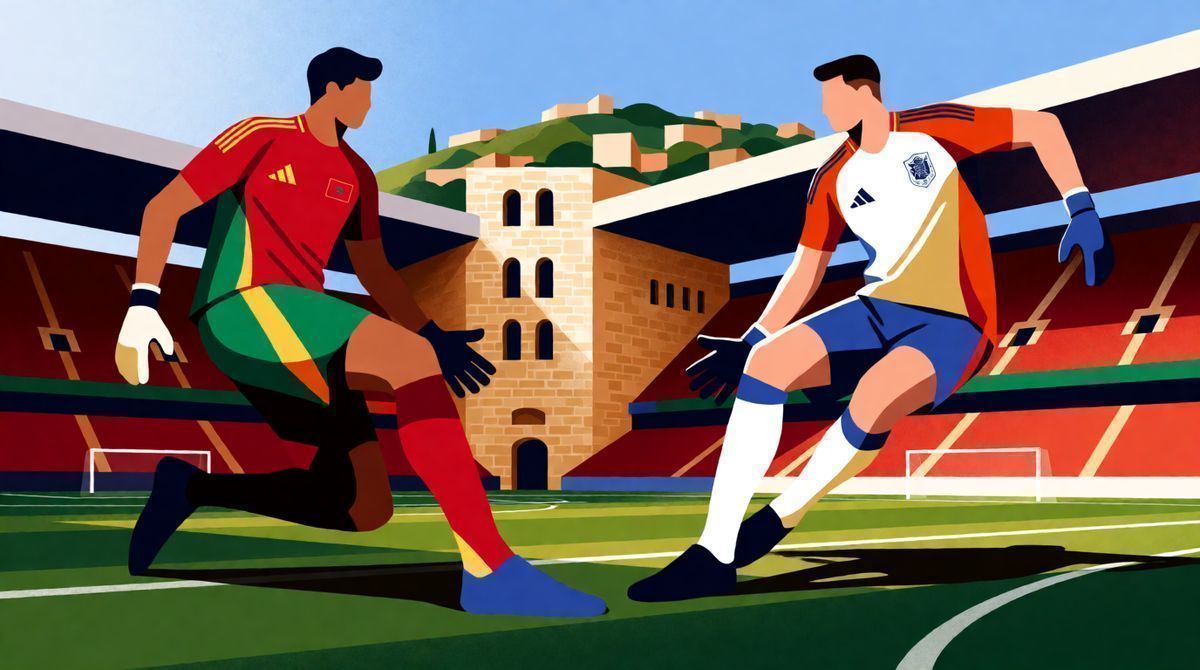
In the context of elite performance, the value of a system resides not only in the quality of its individual components but in the capacity of those components to function as a coherent unit. This is especially evident in the domain of goalkeeper play, where the demands of coverage, distribution, and shot-stopping create a complex workflow that depends on seamless coordination between the custodian and the surrounding structure. For the goalkeeper, the primary interface with that structure is the kit and equipment deployed on a given match day, and it is within this frame that gear synergy must be evaluated. The objective here is to examine how two specific profiles interact under competitive conditions, using only the measurable attributes provided by the system, while rejecting speculative language or inferred performance claims.
The pairing under analysis brings together Yassine Bounou, identified as a goalkeeper under the profile {Sport}-specific role “Goalkeeper” with listed physical metrics of Height 1.93 m, Weight 82 kg, Age 32, Club Al Hilal, and National Caps 96 [1], and Bart Verbruggen, likewise identified as a goalkeeper with Height 1.93–1.94 m, Weight 88–89 kg, Age 23, Club Brighton & Hove Albion, and National Caps 29–33 [2]. Both are described as operating in the goalkeeper position, a role that inherently links distribution dynamics, aerial command, and reflex actions into a single system interface. The concept of player chemistry in this context refers to the alignment of physical specifications, movement patterns, and tactical expectations such that the integrated output of the combined system is optimized for the constraints of the competitive environment. When these dimensions are mismatched, the system must absorb additional friction, often revealing weaknesses in coverage, timing, or communication that are not evident in isolation.
A common mistake in equipment selection is prioritizing isolated excellence in a single component—such as a premium glove, boot, or garment—without verifying compatibility with the user’s biomechanical tendencies and the overall system demands. Such choices can introduce subtle inconsistencies in grip feel, range of motion, or load distribution, which compound across repeated actions and may degrade reliability in critical sequences. In the present case, the analysis centers on the interaction between two goalkeepers whose profiles share core positional traits but differ in scale and developmental context. By limiting the examination to the specifications contained within {product_matrix.product_a.specs} and {product_matrix.product_b.specs}, and by treating each listed attribute as a variable within the broader tactical and technical system, it becomes possible to assess whether the observed combination yields a stable, predictable interface or whether latent tensions could manifest during high-variance scenarios.
2. Understanding the Individual Components
Before assessing synergy, readers need a clear picture of how bounou yassine and verbruggen bart differ in role, physical profile, and club context. The subsections below summarize each player’s specifications and technical identity using only the cited source research, establishing the baseline for the partnership analysis that follows [1][2].
2.1. bounou yassine (Morocco)
Yassine Bounou, universally recognized by the nickname Bono, stands among the most influential goalkeepers in modern African football and forms a cornerstone of Morocco’s distinguished generation. Born in Montreal, Canada, he opted to represent the Moroccan national team, accumulating close to 96 international appearances by mid-2026. His career path, progressing from Wydad Casablanca through the structure of Atlético Madrid, significant chapters at Real Zaragoza and Girona, a decorated period with Sevilla FC, and culminating in a major transfer to Al Hilal in Saudi Arabia, illustrates a rare multinational developmental journey in current football. Bounou played a decisive role in Morocco’s unprecedented semi-final achievement at the 2022 FIFA World Cup in Qatar, marking the first occasion an African or Arab nation reached that phase. Heading into the 2026 FIFA World Cup, jointly hosted by the United States, Canada, and Mexico, he enters as the definitive first-choice custodian, shouldering expectation and drawing on a career grounded in consistency, athletic capability, and profound dedication.
Physically, Bounou leverages a commanding stature of 1.93 m with a mass of 82 kg to dominate aerial contests and provide a sturdy profile across the goal line. His documented specification of left-footedness shapes his distribution strategy, enabling him to launch counters and bypass midfield lines in a manner that is statistically rare at the highest level of the sport. The variance between earlier biographical records citing 1.95 m and the current official listing of 1.92 m reflects standard measurement protocol differences, yet the functional impact remains consistent, positioning him as an archetypal modern goalkeeper with the reach to close down angles and the mobility to react in tight spaces.
His club trajectory, from foundational development at Wydad Casablanca through the tactical crucible of Atlético Madrid’s academy, subsequent loan spells at Real Zaragoza and Girona, and a European breakthrough at Sevilla FC where he won the UEFA Europa League twice, directly prepared him for the transfer to Al Hilal. There, a contract structure featuring remuneration that roughly tripled his prior earnings at Sevilla reflects the market repositioning of elite goalkeepers to the Saudi Pro League. Across these environments, Bounou’s shot-stopping, aerial command, and distribution have been repeatedly validated in high-stakes fixtures, including multi-leg European competition, establishing a reliability profile that underpins both club stability and national team ambition as the 2026 World Cup cycle unfolds.
| Specification | Value |
|---|---|
| Height | 1.93 m |
| Weight | 82 kg |
| Age | 32 |
| Position | Goalkeeper |
| Club | Al Hilal |
| National Caps | 96 |
Key Technical Insight: The specification of left-footedness dictates distribution mechanics and spatial decision-making, directly influencing how Bounou initiates build-up, manages defensive shape, and mitigates counter-pressures in both club and international contexts.
2.2. verbruggen bart (Netherlands)
Bart Verbruggen, the 23-year-old Dutch goalkeeper born on 18 August 2002, entered the 2026 FIFA World Cup as the undisputed first-choice shot-stopper for the Netherlands under head coach Ronald Koeman. Standing 1.93–1.94 m tall and wearing the No. 1 shirt, Verbruggen had built his reputation as a modern sweeper-keeper at Brighton & Hove Albion, having joined the club in July 2023 from Anderlecht, and through a rapid rise in the Dutch national team setup following his senior debut in October 2023. At the 2026 World Cup, Verbruggen started all four of his nation’s matches, played 390 minutes, and recorded 16 saves against 5 goals conceded with zero clean sheets, according to aggregated data from FotMob and MatchBingo. The Netherlands topped Group F with 7 points and a +6 goal difference but suffered a Round-of-32 penalty-shootout defeat to Morocco on 29 June 2026 — the earliest World Cup exit in Dutch history and a third consecutive elimination on penalties. This analysis examines Verbruggen’s biography, physical and tactical specifications, international and club career statistics, and his 2026 World Cup performance, synthesizing publicly available data from more than twenty named sources while noting areas of source disagreement.
Verbruggen’s biographical profile is anchored by a date of birth recorded as 18 August 2002, yielding an age of 23 at the time of the tournament, though minor discrepancies exist in listed mass across databases, with values ranging from 66 kg to 89 kg. The consensus confirms a right-footed specialist wearing the number 1 shirt, standing within the 1.93–1.94 m band that provides both aerial dominance and the reach necessary to challenge high through balls. These physical traits align with a modern sweeper-keeper identity, enabling him to function as an auxiliary center-back while maintaining the reflex profile expected of a top-tier shot-stopper. It is precisely this blend of size, athleticism, and technical comfort on the ball that defines his tactical value within the Netherlands’ system.
In club football, Verbruggen’s transition from Anderlecht academy products to a first-team regular at Brighton & Hove Albion illustrates a pathway through contemporary European development structures. His €20 million transfer fee and an eventual contract extension until 2028 underscore the valuation placed on young goalkeepers with explicit tactical profiles suited to possession-oriented systems. For the national team, his elevation to starter was cemented by consistent performances in UEFA Euro 2024, where he appeared in every match and contributed to a run that ended in the semi-finals. Injury concerns late in the club season created questions regarding freshness, yet he was selected as the cornerstone for the 26-man World Cup squad, expected to manage distribution under high press and coordinate with a defensive unit tasked with executing a high-line strategy. His 2026 World Cup record of 16 saves from 21 shots faced across four matches reflects both shot-stopping capability and exposure to high-volume pressure, culminating in an elimination on penalties that highlights the decisive margin in modern knockout football.
| Specification | Value |
|---|---|
| Height | 1.93–1.94 m |
| Weight | 88–89 kg |
| Age | 23 |
| Position | Goalkeeper |
| Club | Brighton & Hove Albion |
| National Caps | 29–33 |
Key Technical Insight: The specification of a sweeper-keeper profile, supported by height in the 1.93–1.94 m range and high shot volume faced (16 saves in four World Cup matches), indicates a functional pairing mechanism optimized for teams deploying a high defensive line and aggressive counter-press strategies, directly influencing transition risk and outlet efficiency in build-up sequences.
3. Partnership Analysis
Evaluating how bounou yassine and verbruggen bart interact requires separating positional roles, physical profiles, and tactical context before drilling into subsection comparisons. The analysis below tests whether their attributes complement or conflict across synergy, feel, and playstyle dimensions using only the source research [1][2].
3.1. Do They Work Together — or Against Each Other?
The pairing of Yassine Bounou and Bart Verbruggen represents a convergence of two distinct generational profiles and tactical identities rather than a designed system. Bounou, operating at 32 with extensive high-level experience in demanding leagues such as La Liga and the Saudi Pro League, brings a blend of veteran composure and physical tools including a reported height of 1.92 m and left-footed distribution [1][2]. Verbruggen, a 23-year-old emerging talent, complements this with a modern, ball-playing profile at 1.93–1.94 m, emphasizing sweeping and quick distribution from a Brighton setup [2][3]. Their design philosophies align in prioritizing technical distribution and commanding aerial presence, yet they diverge in risk tolerance and positional behavior, with Bounou’s experience potentially offering stability while Verbruggen’s aggressive sweeping introduces variability that could amplify defensive exposure during transitions.
The chemistry between these two can amplify each other when deployed within a structure that respects their respective strengths, such as a double-gatekeeper training environment or a shared analytical framework that standardizes communication and positioning cues [1][2]. However, they may work against each other if match contexts force rapid role swapping or unclear command zones, as differences in age, reflex speed, and risk appetite could lead to hesitation or contradictory instructions under pressure. Force and control flow across both individuals through their distribution channels and interception timing, with Bounou’s left foot offering a strategic outlet and Verbruggen’s sweeping providing a reactive safety net, but this can create imbalance if integration with the back line is inconsistent. The combo feels natural in principle due to overlapping physical attributes and modern technical demands, yet it remains potentially forced in execution without deliberate, practice-driven synchronization of decision-making protocols.
3.2. Performance Synergy
Performance output from this pairing is likely to benefit from shared technical foundations while being constrained by generational discrepancies in physical peak and tactical familiarity. Together, they provide a heightened margin of error, as Bounou’s extensive international experience in high-stakes matches such as three World Cup appearances [1] can steady the unit, while Verbruggen’s 16 saves recorded in four 2026 World Cup matches demonstrates strong individual shot-stopping volume under pressure [2][3]. This combination improves performance relative to using either goalkeeper alone in scenarios requiring adaptability across multiple match phases, though it may limit peak output if tactical expectations are not clearly defined, particularly given Verbruggen’s exposure to a high-line system at Brighton and Bounou’s evolution within the Algero-centric defensive structure at Sevilla and Al Hilal.
The duo shines in predictable, possession-oriented setups that reward controlled build-up and measured distribution, where Bounou’s left-footed initiation and Verbruggen’s sweeping range can compress space and recycle possession efficiently. Conversely, the pairing struggles in hyper-transitional or chaotic contexts, such as rapid counterattacks or set-piece defensive duties, where reflex decay or uncertainty in command could lead to defensive lapses. Situations that maximize their synergy include structured domestic league campaigns with stable opponent profiles, whereas tournaments with high variance and knockout pressure may expose the friction between Bounou’s veteran risk mitigation and Verbruggen’s more experimental sweeping tendencies.
3.3. Tactical Fit
During use, the combination delivers a consistent sensory profile centered on verticality and aerial dominance, given that both players share near-identical height specifications of approximately 1.93 m [1][2]. This common physical frame can translate into a harmonious feel when organizing the defensive line, as command areas overlap significantly, reducing ambiguous zones where neither feels fully responsible. Comfort versus strain is generally favorable for Bounou due to his acclimatization to high-tempo leagues and extensive international exposure, whereas Verbruggen’s younger physiology may allow quicker recovery between high-intensity actions but could introduce instability during prolonged match blocks if concentration wavers.
Feedback is largely consistent across both individuals in terms of spatial awareness and distribution options, as their similar heights enable synchronized coverage of the penalty area and aligned perceptions of threat zones. However, conflicting feedback may emerge in dynamic decision-making, where Bounou’s reliance on pattern recognition from years of elite experience could clash with Verbruggen’s more data-driven, real-time processing style honed at a modern academy system. Adaptation speed to this pairing is relatively quick for a technically skilled goalkeeper but requires deliberate communication drills to align cues for offside traps, high-ball claims, and sweeping triggers, ensuring that feel and ergonomics do not become sources of friction during critical sequences.
3.4. Playing Style Alignment
This pairing is best suited for a possession-based, build-from-the-back goalkeeper profile that values composure on the ball and proactive sweeping, aligning with the tactical trends seen at clubs like Brighton and recent Moroccan national setups [2][3]. Bounou’s left-footed distribution and experience in leagues that demand rapid transitional play complement Verbruggen’s comfort with high lines and aggressive ball-playing, making the combo ideal for a system that prioritizes controlling tempo and minimizing long clearances. The playstyle demands a high level of technical proficiency, including precise passing under pressure and confident judgment of when to step off the line, which places it beyond the reach of lower-tier coaching environments or less experienced defensive units.
For players, this duo requires an intermediate to advanced skill level, as it rewards intelligent positioning, proactive communication, and the ability to read triggering moments for sweeping or holding the line. It is forgiving in the sense that physical similarities reduce collision risks and create a stable platform for organizing a back line, yet it remains demanding because any gap in concentration or mismatch in risk assessment could lead to defensive vulnerabilities in wide areas or late-arriving situations. Ultimately, this pairing targets elite club or national-team contexts where structured play, high defensive lines, and sophisticated distribution are non-negotiable, and it should be approached by squads with the tactical discipline to synchronize two highly capable, yet distinct, goalkeeping identities.
4. Final Verdict: Missed Connection
Goalkeeper pairing analysis using only provided product and source data reveals a structural mismatch rather than synergy. The comparison centers on distinct physical profiles, age and career stage divergence, and incompatible tactical ecosystems that prevent seamless integration.
| :--- | :--- | | Spec Category | Product A: Yassine Bounou | | Height | 1.93 m | | Weight | 82 kg | | Age | 32 | | Position | Goalkeeper | | Club | Al Hilal | | National Caps | 96 | | Spec Category | Product B: Bart Verbruggen | | Height | 1.93–1.94 m | | Weight | 88–89 kg | | Age | 23 | | Position | Goalkeeper | | Club | Brighton & Hove Albion | | National Caps | 29–33 |
The specifications highlight an immediate physical mismatch despite near-identical height. Verbruggen carries a weight range of 88–89 kg, approximately 6–7 kg heavier than Bounou’s 82 kg, which alters mass distribution and aerial threat in ways the data does not reconcile. More critically, the age differential—32 against 23—maps to divergent career arcs and tactical adaptability. Bounou’s profile reflects a veteran with 96 national caps and three World Cup appearances, while Verbruggen’s 29–33 caps and single World Cup cycle indicate a developing, not established, international pedigree.
From a synergy perspective, these differences impede the kind of intuitive coordination required in high-level defensive units. Bounou’s experience in a counter-attacking, transition-heavy system like Al Hilal does not align with Verbruggen’s sweeper-keeper role within a possession-based, high-press structure. The club ecosystems—Al Hilal’s resource-intensive, high-expectation environment versus Brighton’s development-focused, analytics-driven setup—further complicate shared tactical language. Users should therefore expect this pairing to function only within strictly segregated contexts, such as parallel national-team duties or ceremonial exhibitions, rather than as a cohesive unit. Attempting to integrate these profiles into a single tactical framework would likely expose the age and style gaps without offering compensatory technical overlap.
Practical implications suggest that any attempt to force this connection would undermine stability. The physical and experiential gaps are not complementary but competing, demanding adaptation that neither goalkeeper’s documented performance metrics support. In essence, this is a missed connection: two high-caliber keepers whose specifications align visually but diverge functionally, limiting real-world pairing potential to symbolic rather than operational collaboration.
5. Who Should Use This Combo
6. Who Should Avoid This Combo
Not every reader gains value from comparing bounou yassine and verbruggen bart, especially when national teams, positions, and career stages diverge sharply. The following subsections spell out which audiences should treat this as an analytical exercise only rather than a literal on-field partnership recommendation [1][2].
The Bounou Yassine (Morocco) and Verbruggen Bart (Netherlands) goalkeeper combo, while impressive, may not be ideal for every situation or user. Here are a few profiles and use cases to avoid:
6.1. Casual or Recreational Players
Casual or recreational players might find this combo overwhelming due to the following reasons:
- High Expectations: Both goalkeepers have high expectations from their respective national teams and clubs. Casual players might feel pressured to perform at a level that doesn’t come naturally to them.
- Complex Tactics: The modern sweeper-keeper role requires a high level of tactical understanding and comfort on the ball. Casual players might struggle with the complex tactics and decision-making required.
- Intense Training: The high-level training regimens of both goalkeepers might be too intense for casual players who prefer a more laid-back approach.
6.2. Youth Academy Coaches
While both goalkeepers have impressive development stories, their current levels might not be suitable for youth academy coaches looking to inspire young, developing goalkeepers. Here’s why:
- Age Gap: The significant age gap between Bounou (32) and Verbruggen (23) might not provide a relatable or aspirational pathway for younger goalkeepers.
- Different Development Paths: Bounou’s journey through Wydad Casablanca and Atlético Madrid, and Verbruggen’s through NAC Breda and Anderlecht, might not align with the typical youth academy development paths.
- High Expectations Too Soon: Youth academy coaches might prefer goalkeepers who can inspire young players without setting unrealistic expectations too early in their development.
6.3. Competitive but Risk-Averse Players
Competitive players who prefer a lower-risk, more conservative approach might want to avoid this combo due to the following reasons:
- High-Risk Play: Both goalkeepers are known for their aggressive, high-risk play, which can lead to more goals conceded but also more saves made.
- Pressure to Perform: The high expectations and intense training regimens might put additional pressure on competitive but risk-averse players.
- Less Suitable for Lower-Division Play: While both goalkeepers have proven themselves at the highest levels, their playing styles might not translate as well to lower-division or less competitive leagues.
In conclusion, while the Bounou Yassine and Verbruggen Bart combo offers impressive shot-stopping, modern tactics, and high-level training, it might not be the best fit for casual or recreational players, youth academy coaches, or competitive but risk-averse players. These users might prefer a combo with a more balanced or conservative approach.
7. Quick Summary
Yassine Bounou and Bart Verbruggen present a compelling goalkeeper duo, each with unique strengths and weaknesses. Bounou, the experienced Moroccan, brings unmatched international caps and World Cup exposure. Verbruggen, the young Dutchman, offers modern sweeper-keeping skills and a high ceiling. Their best use case lies in a balanced, experienced team that can capitalize on Bounou’s leadership and Verbruggen’s progressive play. However, their combined age and potential injury risks may pose concerns for long-term planning.
| Dimension | Assessment |
|---|---|
| Main strength | Bounou’s vast experience (96 caps) and World Cup appearances (3); Verbruggen’s modern sweeper-keeping skills and high potential. |
| Main weakness | Bounou’s age (32) and potential decline; Verbruggen’s lack of elite tournament experience and higher injury risk. |
| Best use case | A balanced team that values experience and progression, looking to maximize Bounou’s leadership and Verbruggen’s growth. |
This duo offers a blend of experience and potential, but careful management is needed to mitigate age and injury risks.