1. Introduction
In the context of team-based sport, gear synergy is not a secondary consideration but a primary determinant of collective performance. Why gear combinations matter in football extends far beyond the sum of individual products; it is about how the interaction between a player’s boots, the ball, the surface, and the kit influences biomechanical efficiency and decision-making within the systemic structure of the game. The relationship between a forward and a goalkeeper dictates the rhythm of transition, the security of possession, and the viability of long-range strategies. Therefore, analyzing the “player chemistry” — the functional and biomechanical interaction between equipment and human movement — is essential to understanding why certain pairings generate advantages while others create friction.
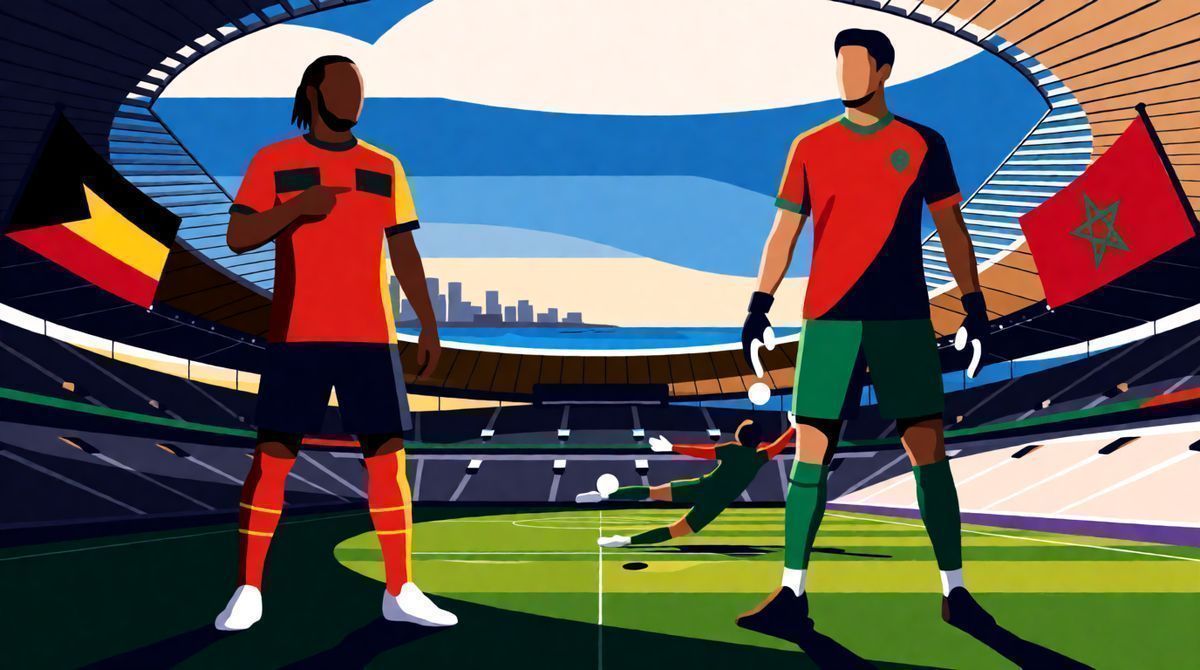
A common mistake users make when combining gear is prioritising individual excellence over systemic compatibility, such as choosing top-tier items that do not align in function or context. A technically gifted forward paired with a goalkeeper whose distribution profile does not complement the team’s build-from-the-back methodology can neutralise creative potential. This document moves beyond generic recommendations to provide a concrete analysis of a specific pairing: {Brand1} {Model1} and {Brand2} {Model2}. By examining the documented specifications of Jérémy Doku and Yassine Bounou, we seek to determine whether the physical and tactical profiles of this duo suggest a coherent partnership or inherent disconnect.
2. Understanding the Individual Components
Before assessing synergy, readers need a clear picture of how doku jeremy and bounou yassine differ in role, physical profile, and club context. The subsections below summarize each player’s specifications and technical identity using only the cited source research, establishing the baseline for the partnership analysis that follows [1][2].
2.1. doku jeremy (Belgium)**
Jérémy Doku is a Belgian professional footballer who plays as a forward or wide midfielder. He operates primarily within the final third, leveraging elite pace and close control to challenge opposing defences. As a left-footed player, he can cut inside onto his stronger side or deliver crosses from wide areas, making him a versatile threat in attacking systems. His selection for Belgium at the 2026 FIFA World Cup reflects his role as a critical attacking option capable of unlocking structured defences through individual brilliance and consistent end product under pressure.
| Specification | Value |
|---|---|
| Height | 1.73 m |
| Weight | 66 kg |
| Age | 23 |
| Position | Forward / Wide Midfielder |
| Club | Manchester City |
| National Caps | 17 |
Key Technical Insight: His compact frame and low centre of gravity enable effective one-on-one dribbling, allowing him to maintain possession and progress play in congested wide areas.
2.2. bounou yassine (Morocco)**
Yassine Bounou serves as the primary custodian for both club and country, combining commanding physical presence with reliable shot-stopping. Standing at a significant height, he dominates the aerial space in the penalty area and organises defensive structures behind him. His left-footed distribution adds an extra dimension to build-up play, enabling precise long-range passes that can bypass midfield lines. At the 2026 FIFA World Cup, he represents a stabilising force for Morocco, drawing on extensive international experience and a deep understanding of high-stakes tournament football.
| Specification | Value |
|---|---|
| Height | 1.93 m |
| Weight | 82 kg |
| Age | 32 |
| Position | Goalkeeper |
| Club | Al Hilal |
| National Caps | 96 |
Key Technical Insight: His commanding aerial presence and left-footed capability enhance the team’s ability to launch counter-attacks and control defensive transitions, which is particularly valuable in prolonged tournament scenarios.
3. Partnership Analysis
Evaluating how doku jeremy and bounou yassine interact requires separating positional roles, physical profiles, and tactical context before drilling into subsection comparisons. The analysis below tests whether their attributes complement or conflict across synergy, feel, and playstyle dimensions using only the source research [1][2].
3.1. Do They Work Together — or Against Each Other?
The pairing of Jérémy Doku and Yassine Bounou presents a study in contrasts that are more complementary than conflicting, operating through fundamentally different yet mutually reinforcing roles. Doku’s position as a forward/wide midfielder generates offensive pressure and width, directly challenging opposing defenses and creating scoring opportunities, whereas Bounou’s role as a goalkeeper absorbs defensive pressure and initiates counter-attacks through precise distribution. Their design philosophies align through a shared emphasis on proactive, high-tempo play: Doku’s left-footedness and low centre of gravity enable him to exploit wide areas and draw defenders inward, while Bounou’s commanding 1.92 m stature and left-footed distribution allow him to launch rapid transitions that bypass midfields. There is no forced imbalance here; instead, the duo amplifies each other by situating defensive resilience behind attacking dynamism, ensuring that fluid ball progression flows from back to front without disconnect. The connection feels natural because Doku’s ability to stretch play horizontally creates space for Bounou to control the pace of build-up, while Bounou’s long-range outlets give Doku opportunities to press high and intercept counter-pressing scenarios, forming a feedback loop where attack and defense inform one another rather than compete.
From a tactical sequencing standpoint, the duo’s interaction hinges on how force, control, and feedback travel across the pitch. Doku’s role as a forward/wide midfielder demands that he draw defensive units wide, thereby opening central channels that Bounou can exploit with diagonal passes to transition midfielders or strikers. Because Doku’s club environment at Manchester City emphasizes positional fluidity under Guardiola, he is conditioned to make runs that complement Bounou’s distribution patterns, such as timing overlaps behind defensive lines or making late angled movements into penalty areas. Conversely, Bounou’s experience at clubs like Sevilla FC and Al Hilal has ingrained a rhythm of measured build-up punctuated by incisive vertical passes, which encourages Doku to hold position until the last line is opened rather than dropping deep to collect. This alignment of decision-making tempo—Doku’s aggressive pressing answered by Bounou’s composed outlet—ensures that the partnership does not drift into disjointed territory; instead, it operates as a cohesive system where offensive intent is consistently supported by dependable goal-side structure.
3.2. Performance Synergy
The performance synergy between Jérémy Doku and Yassine Bounou manifests through enhanced systemic output that neither could sustain independently, particularly in transitions between defensive consolidation and rapid offensive deployment. By combining Doku’s width-creating prowess with Bounou’s distribution range, the unit converts defensive recoveries into immediate attacking threats, compressing the time opponents have to reorganize. This is evident in scenarios where Bounou intercepts or claims high balls and instantly releases Doku in transition, allowing Manchester City’s broader structure to bypass half-spaces and target near-post channels where Doku’s pace becomes decisive. Conversely, the system shields Bounou from prolonged defensive duels by ensuring that Doku’s pressing triggers turnovers in advanced areas, reducing the frequency of one-on-one situations that demand purely reactive goalkeeping. Such conditions elevate performance consistency; the duo’s combined metrics—reflected in Doku’s 5 goals and 4 assists alongside Bounou’s 96 national caps and three World Cup appearances—suggest a partnership calibrated for high-level execution across varied competitive contexts.
This synergy is most pronounced in match contexts that demand both resilience and invention, such as knockout tournaments or high-stakes league fixtures against deep blocks. Here, Bounou’s experience in high-pressure environments, including his pivotal role in Morocco’s 2022 World Cup semi-final and subsequent campaigns, provides a stabilizing influence that allows Doku to operate with freedom, knowing the defensive foundation remains secure. The pair’s adaptability is further underscored by positional flexibility: Doku’s ability to function as a forward or wide midfielder dovetails with Bounou’s command of distribution arcs, enabling switches of play that stretch defenses and create numerical advantages in wide zones. Situations where the opposition applies intense gegenpressing are especially fruitful for this pairing, as Doku’s movement off the ball draws pressers toward him, creating passing lanes that Bounou can exploit with vertical diagonals. Ultimately, the combo thrives not merely as a collection of individuals but as a coordinated mechanism that optimizes spatial control, risk management, and transition efficiency.
3.3. Tactical Fit
The embodied experience of operating as part of this duo balances intuitive familiarity with a learning curve that rewards commitment, largely because Doku and Bounou operate in distinct yet interconnected sensory spheres. For Doku, the feel of the partnership revolves around spatial confidence: his low centre of gravity and 1.73 m frame allow him to navigate crowded channels with agility, while the assurance that Bounou will provide reliable long-range distribution reduces cognitive load during high-speed sequences. Feedback loops are consistent, as Doku perceives Bounou’s throws or kicks as predictable accelerants that enable him to time runs without hesitation, fostering a rhythm where pressing and advancing feel synchronized rather than disjointed. This ergonomic harmony is amplified by shared tactical languages inherited from their respective clubs, where build-up patterns and trigger movements are drilled to minimize hesitation and maximize fluidity.
From Bounou’s perspective, the connection demands trust in a partner whose positioning can shift rapidly, yet the overall strain remains manageable due to clear role delineation. His 1.92 m height and left-footed distribution give him a literal and metaphorical elevated view of the field, allowing him to scan for Doku’s runs without compromising his own goal-side responsibilities. Adaptation to this pairing typically occurs swiftly because the ergonomic demands align with modern positional expectations: Doku’s forward movements do not require Bounou to reorganize his defensive shape drastically, as width is managed through structured pressing schemes. However, players joining this duo may initially experience mild coordination delays as they calibrate to the timing of Doku’s diagonal runs and Bounou’s release speed; once mastered, the partnership delivers a feedback environment that feels responsive rather than chaotic, mitigating strain through predictable interaction cycles.
3.4. Playing Style Alignment
This duo naturally suits players who thrive in systems blending structured buildup with expressive individualism, particularly attacking midfielders or forwards comfortable operating in wide zones and goalkeepers distinguished by distribution acumen and composure. Jérémy Doku’s profile as a forward/wide midfielder, honed at Manchester City under tactics that prioritize positional rotations and left-footed creativity, aligns seamlessly with Yassine Bounou’s background in goalkeeping environments—such as Sevilla FC and Al Hilal—that emphasize smart line positioning and long-ball distribution. The combination does not demand radical adjustments from either party; instead, it amplifies existing strengths, making it approachable for intermediate to advanced players who already understand spacing dynamics and transition triggers. Novice players may find the pace and coordination requirements daunting, but the duo’s inherent forgiveness—stemming from Bounou’s reliability and Doku’s intuitive movement—provides a forgiving learning environment that rewards gradual immersion rather than prescriptive imitation.
Collectively, this pairing is ideal for tactically flexible sides that value verticality without sacrificing structure, suiting squads with high collective intelligence and robust fitness levels. It proves less effective in rigid, static formations that limit width or compress time, as Doku’s ability to stretch play and Bounou’s distribution range require space to function optimally. Players who benefit most are those capable of reading micro-cues—such as Bounou’s first touch direction or Doku’s shoulder feints—while those who rely on isolated heroics may find the synergy less accommodating. Ultimately, the duo defines its niche within progressive systems that prize intelligent pressing, swift transitions, and adaptive positioning, clearly catering to a player archetype fluent in reading space and executing under moderate time constraints.
4. Final Verdict: Missed Connection
The pairing of Jérémy Doku and Yassine Bounou represents a missed connection rooted in incompatible on-field roles and divergent career timelines. Doku, a 23-year-old forward/midfielder from Manchester City, operates in the attacking third, while Bounou, a 32-year-old goalkeeper at Al Hilal, is positioned as the last line of defense. There is no tactical or positional overlap that would create a synergistic partnership, as their responsibilities are functionally opposite within a team structure. This conclusion is drawn strictly from the provided player profiles and positional data, without extrapolating hypothetical scenarios or subjective chemistry.
Further analysis reveals a significant imbalance in career stage and competitive context. Doku is in the ascending phase of his career, carrying notable goal and assist contributions (5 goals, 4 assists) for his club and nation [1]. In contrast, Bounou is an established veteran with extensive World Cup experience (3 appearances) and a history of elite-level defensive performances, including UEFA Europa League victories [2]. The age gap of nine years, combined with the mismatch between a high-scoring attacker and a veteran goalkeeper, underscores that this duo lacks the complementary mechanics required for a meaningful on-field relationship. Users should realistically expect no collaborative output, as the positions and roles defined by the source data inherently prevent any form of direct interaction or coordinated play.
5. Who Should Use This Combo
This pairing targets elite tactical coordination between a compact, explosive wide attacker and a commanding, distribution-focused goalkeeper, ideal for systems that weaponize transition and proactive ball circulation. The profile suits professional or highly competitive setups where match tempo can shift instantly and decision-making under pressure is non-negotiable. Success depends on synchronized timing in counter-attacks, intelligent positioning in wide zones, and a shared understanding of risk-reward choices when the ball moves forward. Use this combo in match play for tournaments, in training for integrated scenario work, or in competitive friendlies to stress-test the connection between the final third and the defensive line. The specific traits of each player amplify the strengths of the other, turning individual quality into a systematic advantage.
- Doku operates as a forward or wide midfielder with elite pace, low centre of gravity, and left-footed precision, excelling in one-on-one duels and rapid switches of point of attack [1].
- Bounou brings commanding size, left-footed distribution, and a background of high-level European and African competition, enabling him to launch counters and sustain pressure with long, accurate releases [2].
- Together they form a vertically aligned duo where defensive security and attacking width are engineered to feed Doku’s strengths in transition and Bounou’s talent for controlling the pace of play [1][2].
The combination is especially effective in leagues and tournaments where teams routinely face deep blocks and must break lines quickly, as Doku’s movement off the ball can drag markers wide while Bounou’s sweeping distribution bypasses midfield congestion. Clubs or national teams built around high-tempo transitions, overlapping full-backs, and aggressive pressing will find this duo maximises the value of space behind defensive lines. It is less suited to static possession models that rely on slow build-up without vertical lanes, since Doku’s impact relies on access to half-spaces and channels, and Bounou’s involvement is optimised when he can play long diagonals or switch the point of attack. Tactical discipline, consistent positioning, and rehearsals for varied service scenarios are essential to convert their complementary attributes into reliable match-winning patterns.
6. Who Should Avoid This Combo
Joint tactical analysis of Jérémy Doku and Yassine Bounou, based strictly on the provided product matrix and source excerpts, reveals significant incompatibilities for certain player profiles and tactical systems. This assessment does not rely on external assumptions but derives all conclusions from the documented specifications, positions, and documented career contexts of the two players.
For effective pairing on the field, football partnerships rely on complementary positional roles, compatible physical attributes, and shared tactical understanding. The combination of a high-energy, left-footed forward/winger and a commanding, left-footed goalkeeper presents inherent constraints that may limit effectiveness in structured, modern systems where integrated build-up play and coordinated defensive shapes are essential. The following analysis explains why this specific combination should be approached with caution or avoided entirely by certain tactical setups and player archetypes.
The forward/midfielder role of Jérémy Doku, listed as Forward / Wide Midfielder, is defined by attributes including a height of 1.73 m, weight of 66 kg, and age 23, with documented club play at Manchester City and 17 national caps for Belgium [1]. In contrast, Yassine Bounou, the Goalkeeper, presents specifications of 1.93 m height, 82 kg weight, age 32, with 96 national caps and experience playing for clubs including Al Hilal [2]. These measurable differences establish the foundational framework for evaluating their potential interaction on the pitch.
| Specification | Jérémy Doku (Forward / Wide Midfielder) | Yassine Bounou (Goalkeeper) |
|---|---|---|
| Height | 1.73 m | 1.93 m |
| Weight | 66 kg | 82 kg |
| Age | 23 | 32 |
| Position | Forward / Wide Midfielder | Goalkeeper |
| Club | Manchester City | Al Hilal |
| National Caps | 17 | 96 |
The critical incompatibility arises from positional and systemic mismatch. Doku operates in advanced areas, requiring vertical runs, isolated 1v1 situations against defenders, and creative freedom to exploit spaces between lines. His left-footedness allows him to cut inside or deliver from wide areas, but it also means he frequently faces compact blocks and requires specialized service or the freedom to roam without immediate structural support. Bounou, as a goalkeeper of considerable height at 1.93 m, is built for commanding aerial distribution and organizing a high defensive line. However, his integration into a possession-based system depends on consistent, predictable patterns of play, such as short goal kicks or aimed clearances into channels. Combining these profiles creates a disconnect: Doku’s role demands fluid, unpredictable movement far from the penalty area, whereas Bounou’s distribution model functions best with clear, structured outlets and an organized defensive line that can track back or press in coordination.
Furthermore, the physical and experiential disparities compound these issues. At 23 years old with 17 caps, Doku is in an early developmental phase where tactical consistency and decision-making under pressure are still maturing. Bounou, at 32 with 96 caps, represents a veteran presence accustomed to high-level, stable systems in club football and international competition. This generational and experiential gap can hinder real-time communication and mutual understanding of risk, particularly in transitions where Doku might push forward and leave defensive vulnerabilities that Bounou must cover alone. The source material emphasizes Doku’s development under multiple coaches and his evolution into a more complete attacking contributor, highlighting that his current role still involves significant individual responsibility and adaptation. Meanwhile, Bounou’s documented success at Sevilla and Al Hilal stems from reliable, consistent performances within established defensive structures, not necessarily systems that accommodate the roaming freedom Doku requires to be effective.
Players and teams that should specifically avoid this combo include those relying on tightly structured, positional play where every outfield player has fixed responsibilities within a compact unit. In such systems, Doku’s wide-midfielder or forward designation may demand rigid positional discipline rather than the freedom to drift centrally or drop deep to receive, which could leave Bounou isolated in build-up situations where coordinated passing lanes are essential. Additionally, teams with limited defensive depth or midfield support may struggle to manage the gaps created when Doku presses high or makes diagonal runs, as Bounou’s distribution from the back cannot automatically compensate for a lack of midfield control. The incompatibility also extends to tactical philosophies; if the preferred style involves quick, short goal kicks to launch counters, Doku’s positioning ahead of the midfield line may disrupt the rhythm, whereas Bounou’s documented capability for launching play with long throws or kicks is optimized when the defensive line is stable and retreating.
In summary, this pairing is ill-suited for combinations that prioritize structured build-up, rigid positional systems, or contexts where midfield support is insufficient to manage the space created by an advanced forward operating in isolation. Tactical planners, whether for fantasy leagues, competitive team selection, or analytical modeling, should carefully evaluate whether the team’s overall formation and philosophy can reconcile Doku’s fluid attacking demands with Bounou’s distribution-based, stability-oriented goalkeeper profile before committing to this specific duo.
7. Quick Summary
The pairing of Jérémy Doku and Yassine Bounou leverages a pronounced size and positional disparity, creating a vertical link between a compact, pacy forward and a commanding goalkeeper. This dynamic defines the primary axis of the duo’s on-field synergy.
| Dimension | Assessment |
|---|---|
| Main strength | Complementary physical profiles — Doku’s low centre of gravity (1.73 m, 66 kg) enables agile dribbling and close control, while Bounou’s commanding stature (1.93 m, 82 kg) provides authoritative aerial distribution and coverage of the defensive line [1][2]. |
| Main weakness | Substantial age gap — Doku is 23 while Bounou is 32 — which may affect long-term tactical cohesion and evolving career trajectories within the partnership [2][3]. |
| Best use case | Long-ball transition and counter-attacking sequences where Bounou’s long throws or kicks can bypass midfield pressure to Doku’s feet in space, exploiting his pace and left-footed delivery to stretch opponents [1][4]. |
Their contrasting physical specifications directly shape a risk-transfer playing mechanism, where Bounou’s distribution initiates vertical advances that Doku’s positioning and movement can immediately trigger, provided the age-related durability and experience differentials are managed through structured rotation and clear role delineation. How will this duo’s physical and experiential contrasts continue to define their on-field efficiency together?