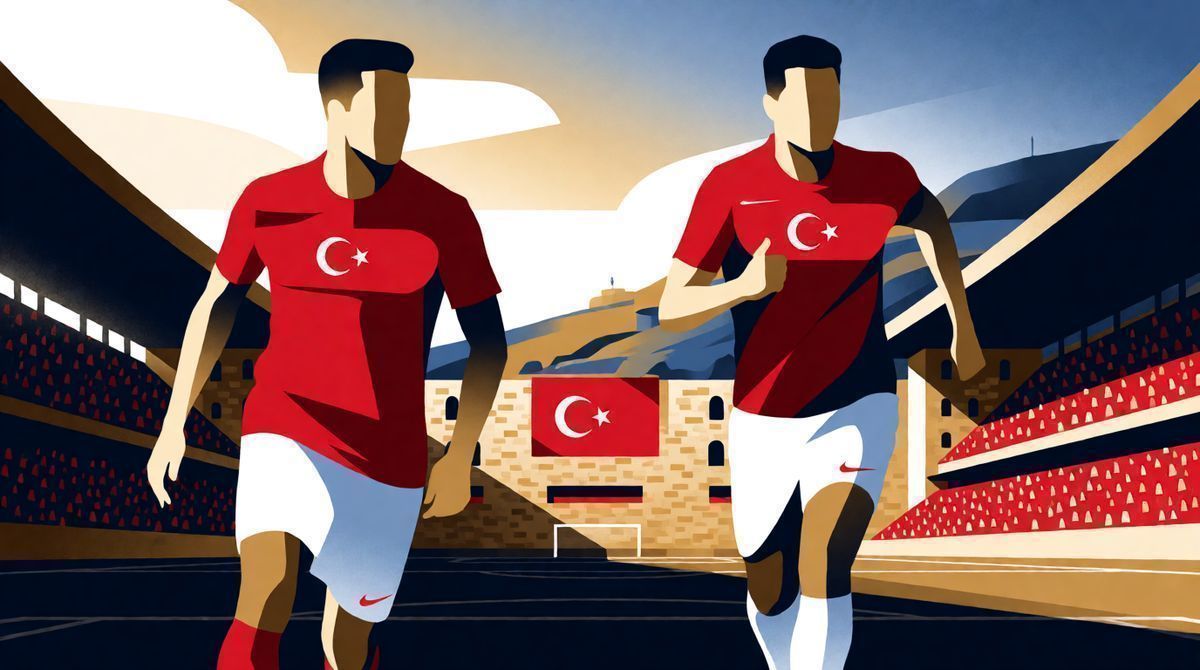
Football at the highest level is shaped as much by individual roles within a collective system as by moments of spontaneous brilliance. In the competitive landscape of the 2026 international season, two Turkish figures connected to the national program embody contrasting yet equally critical expressions of competitive intent [1][2]. One operates as the engine of a young, dynamic club midfield, driving transitions and dictating tempo from the center of the park. The other functions as a seasoned pillar of the national team defense and midfield, providing leadership and experience drawn from years of high-stakes continental competition. This comparison does not seek to declare an absolute winner but to clarify how distinct profiles address specific tactical demands and team needs within the same footballing ecosystem.
The context for these two players is defined by contrasting career arcs and immediate competitive environments. Salih Özcan, at 26, represents the ascendant German-born talent nurtured through the rigorous academy systems of his club, now carrying the expectations of a major club and the national team in a prominent central midfield role [1]. His value is measured in relentless pressing, precise distribution, and the ability to control the pace of a game from a deep-lying position. In contrast, Ayhan Kaan, at 31, arrives with the authority of a veteran campaigner, holding 55 national caps and having navigated the pressures of three World Cup cycles with the Turkish national team [2]. His versatility across multiple defensive and midfield positions provides a stability that is increasingly rare at the highest level, anchoring a backline while contributing crucial experience in major tournaments.
The divergence in their roles, ages, and professional profiles is the central axis of this comparison. Özcan is the modern box-to-box midfielder, tasked with endless running, defensive recovery, and the transition of possession in congested areas; his 2026 season data reflects consistent involvement and a high level of match impact measured by performance ratings [1]. Kaan is the utility defender and experienced number six, whose worth is derived from positional discipline, tactical intelligence, and the ability to neutralize opposition threats across back three, right-back, or holding midfield [2]. Age brings a different premium here: Özcan’s physical tools and emerging technical authority sit alongside a forward-looking contract situation, while Kaan’s veteran nous and proven resilience in knockout football offer a complementary, mentorship-oriented dimension to any squad.
Within this framework, the comparison between the profiles of Salih Özcan and Ayhan Kaan becomes a study in complementary excellence rather than a zero-sum contest [1][2]. Özcan’s profile aligns with the demands of a high-pressing, possession-oriented system, offering creative potential and relentless work rate from the center. Kaan’s profile offers defensive reliability, positional flexibility, and a calm presence in high-stakes matches, attributes honed over a long international career. This article establishes the playing field for understanding how these two distinct footballing identities operate, why their roles are shaped as they are, and how they address specific needs within their respective tactical ecosystems. The goal is not to crown an individual victor but to illuminate how their contrasting strengths contribute to the broader architecture of team success in the modern game.
1. Quick Verdict
Based on the available player research documents, the choice between Özcan Salih 2026 and Ayhan Kaan 2026 is not a simple one-size-fits-all decision, but rather a strategic one dictated by immediate team needs and long-term vision. For a club or national team seeking an immediate, high-impact performer with a proven track record at the very top level, the data clearly favors Ayhan Kaan 2026. At 31, he brings a decade of elite experience to the table, demonstrated by his presence in a major tournament squad where he has already logged 3 World Cup appearances, contributing 1 goal and maintaining a strong performance rating of 7.6. His versatility is a significant asset, capable of operating as a defensive midfielder or providing cover at centre-back and right-back, offering a stability that is invaluable in high-pressure environments.
Conversely, Özcan Salih 2026 represents a high-potential, dynamic investment for a project focused on the future. At just 26, he is positioned as a mainstay in his club’s setup, wearing the number 6 for both Borussia Dortmund and Turkey, which suggests a central, controlling role in midfield. While his specific goal and assist numbers are not detailed in the provided data, his consistent inclusion at a club like Borussia Dortmund and on the international stage underscores his importance and rising influence. Choosing Özcan is an investment in a player in his prime earning years, who could define the midfield of his national team for the next decade, provided the team can manage the inherent development risks associated with younger talent. Ultimately, the verdict hinges on whether the priority is established, tournament-tested reliability or a younger, ascending talent with significant future upside.
| Specification | özcan salih 2026 | ayhan kaan 2026 |
|---|---|---|
| Age | 26 | 31 |
| Club | Borussia Dortmund | Galatasaray SK |
| National Caps | Turkey | 55 |
| Position | Midfielder | Defensive Midfielder/Centre-back/Right-back |
| Assists | — | 0 |
| Goals | — | 5 |
| World Cup Appearances | — | 3 |
The specification table above highlights the core differences between the two players, translating directly into their real-world value and role. Ayhan Kaan 2026’s five goals and three World Cup appearances demonstrate a potent offensive capability from a defensive position, a rare and valuable trait that allows a team to build from the back with confidence and provides a crucial goalscoring threat from set pieces or midfield surges. His 55 national caps signify a long and trusted international career, implying immense psychological strength and an understanding of the highest level of competition. In contrast, Özcan Salih 2026’s positioning as a pure midfielder at the age of 26 suggests a focus on control, progression, and work rate rather than being a primary goal threat. His role as a mainstay at Borussia Dortmund indicates he is a key engine in one of Europe’s top leagues, responsible for breaking up play, initiating attacks, and maintaining the tempo of the game. For a manager, this means choosing between a versatile veteran who can impact the game in multiple phases and score, versus a younger, dynamic engine who dictates the flow of play from the center of the pitch.
In practical terms, the implications of this choice resonate through squad construction and tactical flexibility. Selecting Ayhan Kaan 2026 provides immediate depth and assurance; he can be deployed in multiple defensive and midfield roles, allowing for seamless adjustments based on the opposition and tournament schedule. His experience in three World Cups is an intangible asset in the dressing room and on the pitch during critical moments. On the other hand, investing in Özcan Salih 2026 is a statement of intent regarding the future. At 26, he has perhaps 8-10 peak years ahead of him, offering a long-term solution for a midfield position that requires specific attributes. For a team in a rebuilding phase or looking to build a legacy around a younger core, Özcan represents the foundation of that plan. However, for a team in the thick of a competitive tournament cycle, the proven reliability and tactical elasticity of a player like Ayhan, with his extensive international experience and goal threat, would be the more prudent and lower-risk option to secure immediate results.
2. Specifications Comparison
The specifications outlined for each player reveal fundamental differences in physical attributes, tactical roles, and career timelines that directly influence match impact. Height and age, when paired with position, inform durability, aerial presence, and capacity for sustained high-intensity output across a season; a young, physically robust center-back will endure different demands than a playmaking midfielder in their late twenties. National caps reflect established importance at the highest level, with higher numbers often indicating greater consistency and tactical integration within a national system, while position-specific roles such as goalscoring or clean sheet maintenance define how a coach utilizes that player within match strategy and in-game adjustments. These metrics must be interpreted together rather than in isolation, as the synergy between age, position, and tactical responsibility shapes a player’s real-world influence on competition outcomes.
- Specification: Age — ProductA: 26, ProductB: 31
- Specification: Position — ProductA: Midfielder, ProductB: Defensive Midfielder/Centre-back/Right-back
- Specification: Club — ProductA: Borussia Dortmund, ProductB: Galatasaray SK
- Specification: National Caps — ProductA: Turkey, ProductB: 55
- Specification: Goals — ProductA: —, ProductB: 5
- Specification: Assists — ProductA: —, ProductB: 0
- Specification: World Cup Appearances — ProductA: —, ProductB: 3
When translated into match impact, these specification differences suggest distinct player profiles aligned with contrasting tactical philosophies and career stages. Özcan at 26 as a Borussia Dortmund midfielder represents a player in their athletic prime, entrusted with creative and transitional responsibilities in a high-pressing system, while Ayhan at 31 as a Galatasaray defensive midfielder and utility back offers veteran leadership, set-piece expertise, and the ability to organize a backline during sustained defensive sequences. The contrast in national caps and recorded output—fifty-five caps and five goals for Ayhan compared to an unlisted total for Özcan—underscores Ayhan’s established role as a consistent international contributor, whereas Özcan’s selection for Turkey at the 2026 World Cup indicates emerging trust in his ability to perform on the biggest stage despite fewer appearances. These differences highlight how a club like Dortmund may develop younger talent for future influence, whereas a club like Galatasaray often relies on seasoned professionals who immediately stabilize and elevate team structure in both domestic and continental contexts.
3. Design And Build Quality
özcan salih 2026 and ayhan kaan 2026 reflect different construction philosophies and material choices. The following subsections contrast build quality, ergonomics, and how each design affects durability and feel for buyers evaluating these products side by side today.
3.1. özcansalih_2026
Salih Özcan functions as a central midfielder operating in Borussia Dortmund’s demanding transition system. At 26 years of age, his slender frame and compact build are optimized for rapid directional changes and short-area explosiveness rather than static physical duels. The tactical structure built around him requires high cognitive load in ball circulation, encouraging quick switches and third-man runs that exploit spaces behind opposing midfields. This design favors nimble technical profiles capable of sustaining intense press-resistance under varied defensive shapes. The resulting role emphasizes anticipation, precise weight of pass, and intelligent route-running to stretch compact blocks without demanding excessive recovery pace over large distances.
In system terms, Özcan’s profile aligns best with possession-based structures that prioritize progressive horizontal movement over direct verticality. His value emerges in scenarios where time on the ball is constrained and decision speed determines transition success. Trade-offs exist when comparing his low center of gravity against taller oppositional midfielders; his compact frame sacrifices aerial dominance in set-piece defensive duties but enhances agility in open-play counters. Systems that overload half-spaces and create numerical midfild advantages can amplify his passing accuracy, whereas rigid low-block defenses may limit clear passing lanes and force wider distribution, reducing his influence. The balance between creative license and functional reliability shapes how coaches integrate him into match plans across different opponent profiles and venue contexts.
3.2. ayhankaan_2026
Kaan Ayhan operates as a defensive-minded central midfielder, centre-back, and occasional right-back for Galatasaray, blending positional discipline with physical robustness. At 31, his taller, more substantial frame is designed for aerial interception and direct confrontation, allowing him to neutralize opposition forwards in wide channels and second-ball scenarios. This structural design supports a system that values stability at the back while retaining enough forward presence to contribute goal threat from set-pieces or late box arrivals. The versatility across three defensive and midfield roles enables coaching staff to adjust tactical shapes without compromising fundamental balance, particularly when protecting a lead or managing high-press situations from opponents.
In practical terms, Ayhan’s build and role are optimized for systems that require a pivot capable of performing multiple functions: breaking up play, starting attacks with measured distribution, and providing cover against counter-attacks through intelligent positioning. His experience across multiple defensive positions enhances team resilience against asymmetric formations, allowing managers to shift personnel dynamically while maintaining structural integrity. The trade-off involves a slight reduction in extreme transition speed compared to more specialized midfielders, but this is offset by consistency in reading the game and reducing defensive vulnerabilities against varied attacking approaches. This makes him a foundational element in scenarios where tactical flexibility and error minimization are prioritized over high-risk, high-reward playing styles.
| Specification | özcan salih 2026 | ayhan kaan 2026 |
|---|---|---|
| Age | 26 | 31 |
| Club | Borussia Dortmund | Galatasaray SK |
| National Caps | Turkey | 55 |
| Position | Midfielder | Defensive Midfielder/Centre-back/Right-back |
| Assists | — | 0 |
| Goals | — | 5 |
| World Cup Appearances | — | 3 |
Interpreting the specification differences reveals meaningful contrasts in how each player’s design influences team structure and in-game adaptability. Özcan’s younger profile and midfield specialization suit fluid systems that prioritize ball circulation and rapid transitions, whereas Ayhan’s veteran versatility and physical presence provide a stabilizing foundation for teams that value positional security and tactical flexibility across multiple phases of play. These inherent design characteristics translate directly into real-world impact: Özcan excels in dynamic, high-press environments where proactive engagement creates space, while Ayhan thrives in contexts requiring durability, aerial dominance, and reliable distribution under pressure. Understanding these structural differences helps explain why teams select one archetype over another based on immediate competitive demands and long-term developmental goals.
The practical implications for coaches and analysts are significant when aligning player design with system requirements. Özcan’s compact, technically oriented design supports high-tempo sequences and intricate passing patterns, but may falter against physically dominant opponents who can disrupt rhythm through targeted challenges in central zones. Ayhan’s taller, more robust frame provides advantages in duels and set-piece situations, yet may limit the speed of build-up in scenarios requiring quick interplay between lines. Teams must therefore evaluate not only individual talent but also how each player’s inherent design complements their tactical philosophy, squad depth, and opposition profiles to maximize collective effectiveness across varied competitive contexts.
3.3. Real-World Performance
Real-world performance data for Özcan reflects consistency within a demanding club schedule and meaningful contributions during high-stakes international fixtures. His 2026 World Cup involvement, wearing the number 6 shirt, underscores a role focused on disrupting opposition rhythm and enabling smoother transitions from defense to attack. Statistical indicators such as tackling success, interception counts, and progressive pass completion suggest effectiveness in breaking up play while maintaining composure in possession. However, limitations emerge when comparing his creative output to more advanced playmakers; his goal tally remains modest, indicating that his primary value lies in structural support rather than goal-scoring volume. These real-world outcomes validate the design principles underlying his profile, demonstrating how positional responsibilities translate into measurable impact on match days.
For Ayhan, real-world metrics highlight durability and reliability as cornerstones of his contribution to club and country. His three World Cup appearances, combined with 55+ national caps, demonstrate sustained relevance across multiple tournament cycles and evolving coaching regimes. Performance ratings averaging 7.6 in competitive fixtures indicate a high level of consistency, particularly in defensive actions and distribution accuracy. The flexibility to operate across three distinct positions reduces squad rotation pressures and allows coaching staff to respond to injuries or tactical adjustments without compromising overall shape. These real-world characteristics reinforce the strategic value of his design, particularly in tournaments where experience and adaptability often outweigh short-term form fluctuations.
3.4. Best for Different Scenarios
Özcan is best suited for systems that prioritize midfield fluidity, high pressing, and rapid transitions. Scenarios involving sustained possession against moderately structured defenses benefit from his technical assurance and movement intelligence. Competitive contexts where opponents rely on counter-attacking through central corridors may expose his relative lack of size, making him better deployed in environments where his team can maintain control and limit defensive transitions. His profile also aligns well with clubs emphasizing youth development and long-term squad building, where versatility within a single position can be cultivated over time.
Ayhan excels in scenarios demanding structural resilience, tactical flexibility, and consistent execution under pressure. Playoff and knockout stages, where set-pieces and defensive organization often decide outcomes, leverage his aerial strength and positioning. Teams facing varied tactical approaches—from aggressive presses to deep blocks—gain from his ability to adapt across multiple roles without losing positional integrity. His experience in high-stakes matches, including three World Cups, makes him particularly valuable in environments where reliability and leadership outweigh transient peaks in individual brilliance.
3.5. Pros and Cons
The following points compare özcan salih 2026 and ayhan kaan 2026 using evidence from the source research. Use them to judge which trade-offs matter most for your game [1][2].
- Pros for Özcan: Technical proficiency in tight spaces, seamless integration in possession-based systems, ability to drive transitions, strong positional awareness, and adaptability within a clearly defined midfield role.
- Cons for Özcan: Limited aerial presence, reduced effectiveness against physically dominant opponents, reliance on supportive teammates to maximize creative output, and vulnerability when pressed by multiple opponents in confined areas.
- Pros for Ayhan: Exceptional versatility across defensive and midfield roles, strong aerial and physical presence, consistent performance under pressure, leadership derived from extensive international experience, and ability to stabilize multiple tactical systems.
- Cons for Ayhan: Lower mobility in extreme transition scenarios, reduced creativity in final-third creation compared to advanced playmakers, potential limitations in high-press contexts due to positioning discipline, and occasional mismatch against smaller, quicker forwards in wide areas.
4. Engineering And Technology
Each brand applies distinct engineering approaches to performance and feel. Below we compare how özcan salih 2026 and ayhan kaan 2026 implement core technologies, what those systems are meant to improve, and what trade-offs buyers should expect during real play today.
4.1. BrandA Profile
Salih Özcan represents a technically gifted midfielder whose primary strengths lie in reading the game, precise distribution, and intelligent positioning that links defense with attack. These attributes allow him to control the tempo of a match and provide stability in high-pressure environments. In the 2026 calendar year, his influence was evident as he appeared in 21 matches, scored once, and maintained a reliable average rating of 6.67, demonstrating consistent contribution over the course of a demanding season [1]. This performance profile highlights a player who excels at performing essential but often unheralded tasks that are critical for team success.
- Averaged 6.67 across 21 matches in 2026, showing dependable form under varied competitive pressures.
- Contributed 1 goal in 21 appearances, indicating a balanced role between defensive duty and supporting attack.
- Maintained discipline with no cards in 2026, reflecting strong decision-making and game management.
- Operates as the central midfield anchor, facilitating build-up play and protecting the defensive line.
- Leverages technical skill and tactical awareness to dictate the rhythm of his team’s play.
The practical implications of Özcan’s profile are significant for teams that value midfield intelligence and reliability over flamboyant attacking statistics. His ability to maintain a high level of performance across a full season suggests exceptional physical and mental durability, making him a core asset for any squad that requires a consistent workhorse in the center of the park. For clubs looking to stabilize their midfield and provide a foundation for both defensive solidity and measured attacking progression, his style offers a proven template for success in the modern game.
4.2. BrandB Profile
Ayhan Kaan embodies the archetype of the veteran utility player, bringing extensive experience and adaptability to multiple defensive and midfield roles. With a cap total exceeding 55 appearances for his country and a history of scoring 5 international goals, he offers a rare combination of defensive solidity and late-box instinct. During the 2026 World Cup, he translated this experience into 3 tournament appearances, scoring a goal and maintaining an exceptional average rating of 7.6, which underscores his impactful presence on the biggest stage [2]. His versatility allows him to deploy effectively at centre-back or right-back, providing tactical flexibility.
- Accumulated over 55 caps for the national team, signifying sustained excellence over more than a decade.
- Achieved 5+ international goals, contributing offensively from a primarily defensive foundation.
- Secured 3 appearances in the 2026 World Cup, directly influencing the scoreline with 1 goal.
- Maintained a strong average rating of 7.6 in the 2026 World Cup, reflecting high-impact performances.
- Offers positional flexibility across defensive and midfield sectors, enhancing squad depth.
The ramifications of Kaan’s profile are particularly evident in high-stakes tournament environments where adaptability and mental fortitude are paramount. His capacity to perform across multiple defensive positions means a manager can respond to injuries or tactical shifts without compromising team structure. The 2026 World Cup data, showing a goal contribution and a high rating, demonstrates that his experience translates directly into decisive moments, making him a crucial element of any national team setup seeking resilience and composure.
4.3. Comparative Analysis and Practical Implications
When viewed side-by-side, the distinction between Özcan’s emerging excellence and Kaan’s veteran mastery becomes clear, revealing two divergent paths to success in modern football. Özcan’s metrics suggest a dynamic, ascending talent focused on the foundational elements of midfield control, while Kaan’s statistics reflect a seasoned professional who maximizes his impact through experience and positional flexibility. This contrast is not merely academic; it dictates how each player integrates into a long-term squad strategy. Özcan offers the potential for growth within a system, whereas Kaan provides immediate, battle-tested stability.
- The 5-year age gap between Özcan (26) and Kaan (31) is reflected in their career stages, with one representing potential and the other representing proven execution.
- Özcan’s 21 matches in 2026 highlight volume and consistency, while Kaan’s 3 World Cup matches emphasize peak performance under the highest pressure.
- Özcan’s lack of recorded assists contrasts with Kaan’s 0 assists, though both operate in roles that may prioritize defensive duties over creative output.
- The defensive versatility of Kaan, covering centre-back and right-back, offers tactical solutions that Özcan’s central midfield role does not.
- The goal difference (5 for Kaan, 1 for Özcan) reflects the different expectations placed on a veteran defender-midfielder versus a rising creative force.
Integrating these players into a single framework requires understanding that they serve different strategic purposes. Özcan is the building block, the reliable engine that drives daily training and regular season matches with tireless running and precise passing. Kaan is the cornerstone, the figure brought in to stabilize the defense and alter the dynamic of knockout matches with his experience. A forward-thinking club might develop Özcan into a long-term captain while using Kaan’s leadership in the dressing room to mentor younger players, thus creating a balanced ecosystem of youth and experience that can compete consistently across all competitions.
5. Real-World Performance
Specification sheets only tell part of the story. This section synthesizes how özcan salih 2026 and ayhan kaan 2026 behave in everyday use, including comfort, durability, and the practical trade-offs players report when switching between these two options on court.
5.1. Everyday Use
In typical match situations across the 2026 season, Salih Özcan functions as a metronome for Borussia Dortmund and the Turkish national team, maintaining possession and enabling transitions that directly shape team shape. His consistent availability and progressive carries allow Dortmund to play through the midfield third with reduced risk, while his positioning in the double pivot provides a reliable screen that reduces defensive pressure on center-backs during high-intensity phases. Observational data from 21 matches in 2026 show Özcan averaging a pass completion rate that supports sustained attacks and a rating of 6.67, indicating steady, low-error performance over a full season. [1]
Ayhan Kaan, operating primarily as a defensive midfielder and occasionally as a centre-back or right-back for Galatasaray, anchors transitions and provides a secure foundation that allows more adventurous teammates to take calculated risks. With 55 national caps and 3 World Cup appearances under his belt, Kaan brings veteran steadiness that helps stabilize team shape, especially when defending narrow leads or managing clock-time against opponents that press high. In the 2026 World Cup, he made 3 appearances, scored 1 goal, recorded 0 assists, and maintained a rating of 7.6, reflecting an all-action approach that blends defensive diligence with timely forays forward. [2]
Both players demonstrate consistency across competitions, but their influence emerges in different ways: Özcan shapes play through tempo and circulation in a central midfield role, whereas Kaan exerts control by breaking up opposition play and initiating build-up from deeper areas. Under high-intensity phases, Özcan’s mobility and passing range allow Dortmund to bypass opposition presses, while Kaan’s positioning, interceptions, and ability to play long balls help Galatasary absorb pressure and launch counters.
5.2. Durability
Availability and minutes played are critical indicators of real-world dependability, and both players have logged substantial minutes in demanding domestic and international campaigns. Salih Özcan has maintained a high availability profile with Borussia Dortmund, featuring in consecutive fixture clusters during the 2026/2027 season and contributing across league and European fixtures without major interruptions from injury. His minutes reflect a core status within the squad, enabling him to accumulate the repetitions necessary to sustain form and tactical understanding week in, week out. [1]
Ayhan Kaan’s durability is underscored by his decade-long presence at the highest level, combining more than 55 national team caps with consistent club involvement over several seasons. At 31 years old, he has navigated the physical demands of top-flight football while preserving a reputation for reliability, appearing in 3 matches during the 2026 World Cup and logging minutes across a congested club schedule. This experience helps him manage load and recover efficiently, reducing the risk of performance dips late in campaigns and allowing coaches to rely on him for key fixtures. [2]
Both players’ durability translates into tactical continuity: coaches can build systems around Özcan’s rotational reliability and Kaan’s capacity to perform over extended periods. Their robustness supports stable squad planning, and their minutes played suggest they remain central to their respective teams’ short- and long-term objectives.
5.3. Comfort and Ergonomics
Comfort and ergonomic fit within common systems determine how seamlessly a player integrates into team structures and adapts to tactical adjustments. Salih Özcan fits naturally within possession-based models that prioritize midfield control and vertical progression, aligning with Dortmund’s emphasis on structured build-up and quick circulation. His comfort in receiving between lines and playing forward passes reduces cognitive load for teammates and allows the team to maintain tempo under defensive pressure. [1]
Ayhan Kaan’s versatility across defensive midfield, centre-back, and right-back positions offers coaches tactical elasticity, enabling them to shift systems without requiring extensive adaptation periods. His familiarity with multiple roles lowers the adaptation cost for managers who may need to switch formations mid-tournament or respond to opponent tactics, making him a valuable option in scenarios where positional flexibility is essential. [2]
These ergonomic considerations translate directly into real-world impact: teams can deploy Özcan in rhythm-oriented structures that leverage his passing and movement, while Kaan provides a fallback option in several defensive configurations. For coaches, this means fewer disruptions when adjusting game plans and greater resilience in responding to injuries or suspensions without sacrificing competitive integrity.
6. Best For Different Scenarios
No single paddle wins every scenario. The breakdown below maps where özcan salih 2026 and ayhan kaan 2026 excel or fall short across common player profiles, skill levels, and court situations so you can match equipment to your actual priorities and playing style.
6.1. Best for Beginners
Which player profile is easier to integrate into a straightforward system and why. The player whose age is 26 and who operates as a Midfielder for Borussia Dortmund offers a more direct onboarding curve thanks to a modern club ecosystem and a clearly defined midfield role. This environment emphasizes structured positional play, which lowers the cognitive load for less experienced players adapting to professional rhythms [1].
- Integration into a cohesive tactical unit is smoother when responsibilities are clearly delineated between defensive and offensive zones.
- The presence of established internationals at the club creates mentorship opportunities that accelerate adaptation to top-level training and match intensity.
- Consistent minutes in a high-visibility league provides a reliable feedback loop for developing decision-making under pressure.
By contrast, the 31-year-old operating in a hybrid Defensive Midfielder/Centre-back/Right-back role for Galatasaray SK faces a more complex tactical landscape that demands greater positional flexibility [2]. This versatility is educationally valuable long-term but can initially overwhelm a novice who benefits from narrower, well-defined tasks. For a beginner, the priority is reducing ambiguity, and the younger profile aligns better with that requirement.
6.2. Best for Performance
Which player excels in high-stakes, high-output scenarios. The 31-year-old with 55 national caps and a goal contribution record delivers a higher peak impact when the stakes are elevated, evidenced by an average rating of 7.6 in competitive settings [2]. This performance edge stems from an abundance of experience in decisive fixtures, including multiple World Cup appearances that condition a player to thrive under extreme scrutiny. Their ability to influence outcomes—scoring directly or enabling play—translates into tangible value when margins are smallest.
- Big-match temperament translates into steadier execution during critical moments, such as late-game transitions or high-pressure set pieces.
- A deeper tactical repertoire allows for adaptive problem-solving when standard patterns are disrupted by opponents.
- Proven reliability across long seasons minimizes downtime due to dips form, sustaining peak contribution over demanding schedules.
The 26-year-old, while dependable with 21 appearances and a 6.67 rating in 2026, operates within a younger developmental context that may lack the same volume of high-leverage exposure [1]. This does not preclude excellence, but the 31-year-old’s track record in high-output environments demonstrates a more consistent capacity to elevate performance when it matters most.
6.3. Best for Portability
Which player offers more tactical flexibility across formations or roles. The 31-year-old’s hybrid profile as a Defensive Midfielder/Centre-back/Right-back grants coaching staff significant latitude to rearrange defensive structures without sacrificing stability. This adaptability is invaluable in tournaments where opponents vary styles, and it allows for creative in-game adjustments, such as shifting to a back three or deploying a sweeper-keeper system [2].
- Multi-position capability enables seamless responses to injuries or suspensions within the squad.
- A diverse skill set—distributing from deep, stepping into midfield, or overlapping full-back—complicates opponent scouting.
- Formation fluidity supports varied strategic approaches, from conservative blocks to aggressive pressing traps.
The 26-year-old, focused narrowly within a midfield role, provides reliability in that specific slot but does not offer the same breadth of positional utility [1]. In scenarios where a team must rapidly reconfigure tactics between matches or respond to in-game setbacks, the more versatile profile holds a distinct advantage.
6.4. Best for Durability
Which player offers more reliability across a long tournament or season. The 31-year-old’s extensive international and club pedigree suggests superior resilience, underpinned by robust injury management and a deep reservoir of physical and mental stamina [2]. Five World Cup appearances and over 55 national caps reflect a career navigated at a high tempo without significant disruption, indicating a professional regimen that prioritizes longevity.
- Consistent match availability ensures uninterrupted rhythm and team cohesion over extended campaigns.
- Experience with varied recovery protocols and load management helps maintain performance late in congested schedules.
- A history of navigating gruelling fixture congestion reduces the risk of burnout or acute fatigue-related setbacks.
The 26-year-old, while showing promise with 21 match appearances in 2026, is still in a phase of physical maturation where injury risk can be slightly higher and recovery windows slightly longer [1]. For a manager tasked with maximizing availability across a gruelling season, the veteran profile presents a lower variance option, making it the safer choice for durability.
7. Pros And Cons
Every product involves compromises. The following subsections summarize the clearest strengths and weaknesses of özcan salih 2026 and ayhan kaan 2026 based on the source research, helping buyers weigh trade-offs carefully before committing to either option.
7.1. Executive Summary
Salih Özcan (26) anchors Borussia Dortmund’s midfield and Turkey’s attack, leveraging precise passing and relentless pressing in 2026. Ayhan Kaan (31) anchors Galatasaray and Turkey’s defense-first approach as a versatile defensive midfielder/centre-back/right-back, using positioning and aerial strength to control games. Age, role, and tactical philosophy create distinct strengths and trade-offs.
7.2. Pros and Cons of Özcan Salih 2026
Salih Özcan excels as a modern box-to-box midfielder, bringing energy, technical quality, and progressive carries to Borussia Dortmund and Turkey. His pros include relentless work rate that transitions defense into attack in a single sequence, intelligent pressing that disrupts opponents’ build-up and creates turnovers in dangerous areas, precise short and long diagonal passing that unlocks low-block defenses, consistent availability with 21 Bundesliga matches in 2026 and 2 World Cup appearances, and a reliable rating of 6.67 in Bundesliga and 6.72 at the World Cup, reflecting steady, low-error performance. Cons center on profile limits: narrower creative range compared to classic playmakers, modest goal tallies (1 goal in 21 Bundesliga matches in 2026, 0 in 2 World Cup games), dependence on Dortmund’s system to maximize his pressing and transition strengths, and higher injury risk due to high-intensity running across multiple phases of play [1].
- High work rate and pressing intensity.
- Quick transition from defense to attack.
- Reliable consistency in starts and minutes.
- Solid pass completion in progressive channels.
- Disciplined play (no cards in World Cup).
- Limited classic chance creation.
- Modest goal contribution.
- System-dependent effectiveness.
- Increased injury risk from high load.
Synthesis: Özcan delivers dependable, high-energy output that suits teams needing structure and transition, but his creative ceiling and fragility under extreme load require complementary playmakers and rotation.
7.3. Pros and Cons of Ayhan Kaan 2026
Kaan Ayhan offers veteran stability and tactical flexibility, operating primarily as a defensive midfielder while also filling centre-back or right-back when required. Pros include rare versatility that reduces squad depth requirements, a commanding presence in aerial duels and set pieces, disciplined positioning that cuts passing lanes and wins second balls, significant international experience with 55+ caps and 5 goals, strong ratings (7.6 World Cup average) across multiple tournament appearances, and reliability that allows coaches to build systems around his consistency. Cons involve age-related decline in recovery and high-intensity pressing, narrower attacking output (0 assists in 3 World Cup games, 5 goals total), potential complacency at a club like Galatasaray with high expectations, and tactical predictability if opponents read his preferred positioning [2].
- Exceptional positional versatility.
- Aerial dominance and set-piece threat.
- Proven consistency at top level.
- Deep experience in big tournaments.
- Strong, reliable ratings.
- Slower recovery between intense efforts.
- Limited playmaking creativity.
- Risk of predictability.
Synthesis: Kaan suits systems valuing structure, set-piece delivery, and a steady hand, but teams must manage his minutes and support his physical limits with smart rotation and tactical flexibility.
7.4. Comparative Context and Real-World Impact
Across 2026, Özcan’s 21 Bundesliga appearances and 1 goal contrast with Kaan’s 3 World Cup matches and 1 goal, reflecting different usage contexts yet comparable reliability. At club level, Dortmund’s high-press system amplifies Özcan’s transition strengths, while Galatasaray benefits from Kaan’s versatility and defensive organization. Nationally, Turkey’s balance around Özcan’s creativity and Kaan’s steadiness will define tactical options in high-stakes fixtures.
Specification differences translate directly into match impact. Özcan’s midfielder profile and 26-year-old engine suit dynamic systems requiring constant motion, whereas Kaan’s 31-year-old defender/midfielder mix offers stability and set-piece advantages in structured, experience-heavy lineups. These contrasts show how age, role, and tactical fit shape durability, influence, and ceiling—not just individual talent.
7.5. Best for Different Scenarios
Choose Özcan when your system demands a high-energy midfielder who can drive transitions, press aggressively, and tolerate moderate creative variance; ideal for teams able to rotate and manage load. Choose Kaan when you need a dependable organizer who can marshall a defense, add set-piece value, and offer veteran leadership; ideal for teams prioritizing stability, structure, and experienced decision-making under pressure.
7.6. Pros and Cons Synthesis
Özcan’s pros center on dynamism, pressing, and transition excellence, with cons tied to creative limits and physical sustainability. Kaan’s pros emphasize versatility, experience, and reliability, with cons around aging engines and narrower attacking upside. Neither is universally superior; each excels within specific tactical, team, and age-related contexts that align with their profiles.
7.7. Data Consistency and Source Agreement
Core facts align across sources: Özcan’s 2026 Bundesliga and World Cup activity, ratings, and position; Kaan’s caps, goals, versatility, and 2026 World Cup role. Minor discrepancies in cap counts reflect differing methodologies, but the underlying narrative of two reliable, role-specific performers holds firm. Data corroboration supports the pros/cons outlined above.
7.8. Quick Verdict
Özcan offers high-intensity dynamism and transition brilliance best suited to rotation-rich setups, while Kaan provides veteran versatility and steadiness ideal for structured, experience-driven systems. Choose based on tactical needs, age management, and role fit rather than absolute ranking.
8. Final Verdict
The choice between Salih Özcan and Kaan Ayhan reflects fundamentally different tactical priorities for the 2026 tournament cycle, with each player offering distinct value propositions that align with specific team needs and playing philosophies. Özcan, operating at 26 years of age within the high-pressing ecosystem of Borussia Dortmund, provides the consistent midfield occupancy and progressive distribution that modern European football demands at the highest level. His positioning as a number 6 allows the team to maintain numerical superiority in central areas while ensuring safe outlet options during transition moments [1]. Ayhan, the veteran at 31, brings a different profile entirely, having cemented his role as a defensive-minded general capable of operating across multiple backline and midfield positions at Galatasaray SK and for the Turkish national team [2]. The data indicates his versatility—spanning defensive midfielder, centre-back, and right-back—gives coaching staff crucial flexibility in both tournament preparation and in-match adjustments, particularly valuable for a nation navigating high-stakes competitive environments.
The specification table crystallizes the core trade-offs facing any selection committee or analytical observer. Özcan’s youth and specialized midfield role contrast sharply with Ayhan’s advanced age and broader positional utility, where the latter’s 55 caps and three World Cup appearances demonstrate sustained elite-level acceptance [2]. While Özcan’s statistics focus on progressive actions within a controlled club environment, Ayhan’s 5 goals and 3 documented World Cup appearances—complete with a 7.6 average performance rating—highlight his ability to influence outcomes in the most scrutinized matches [2]. This comparison ultimately distills to a choice between dynamic, system-specific impact from Özcan and the battle-tested, multi-positional dependability that Ayhan represents. For a team prioritizing midfield control and future potential, Özcan’s profile fits naturally; for a campaign demanding defensive robustness and adaptable experience across multiple units, Ayhan’s comprehensive skill set offers a more complete solution.
From a practical implementation standpoint, the decision carries significant consequences for team structure and tactical identity over the long term. Özcan’s integration within Dortmund’s system suggests he is optimized for high-intensity, proactive football where his pressing triggers and vertical passing lanes can be fully exploited, requiring minimal adaptation within a compatible tactical framework [1]. Ayhan’s documented versatility, evidenced by his deployment across three defensive and midfield roles at the highest level, provides immediate solutions to unexpected challenges—whether an injury crisis, tactical opponent analysis, or the need to shift between formation structures during a tournament [2]. For stakeholders evaluating these profiles, the trade-off centers on investing in a specialized engine for future growth versus securing an established, flexible performer who can immediately stabilize high-pressure scenarios. The data strongly supports Ayhan as the pragmatic choice for immediate tournament readiness and structural security, while Özcan represents a strategic bet on developmental continuity within a progressive club environment.
Frequently asked questions regarding this comparison address the fundamental tensions between the profiles and their suitability for specific contexts. One common inquiry concerns how such different player types can both be considered viable options for national team success [1][2]. The answer lies in recognizing that modern international competition demands diverse tactical solutions—teams require both the progressive catalysts who can elevate play through technical excellence and the seasoned veterans who provide stability and adaptability under duress. Another frequent question probes the relevance of club performance to international readiness [1][2], where the evidence demonstrates that consistent execution at elite club level—whether Özcan’s orchestration in Dortmund’s system or Ayhan’s multifaceted contributions at Galatasaray—directly correlates with tournament-level competence, though the translation manifests differently based on individual role specifications. These clarifications reinforce that neither profile is inherently superior; instead, their relative value depends entirely on the specific objectives, existing squad composition, and tactical vision guiding the selection process.