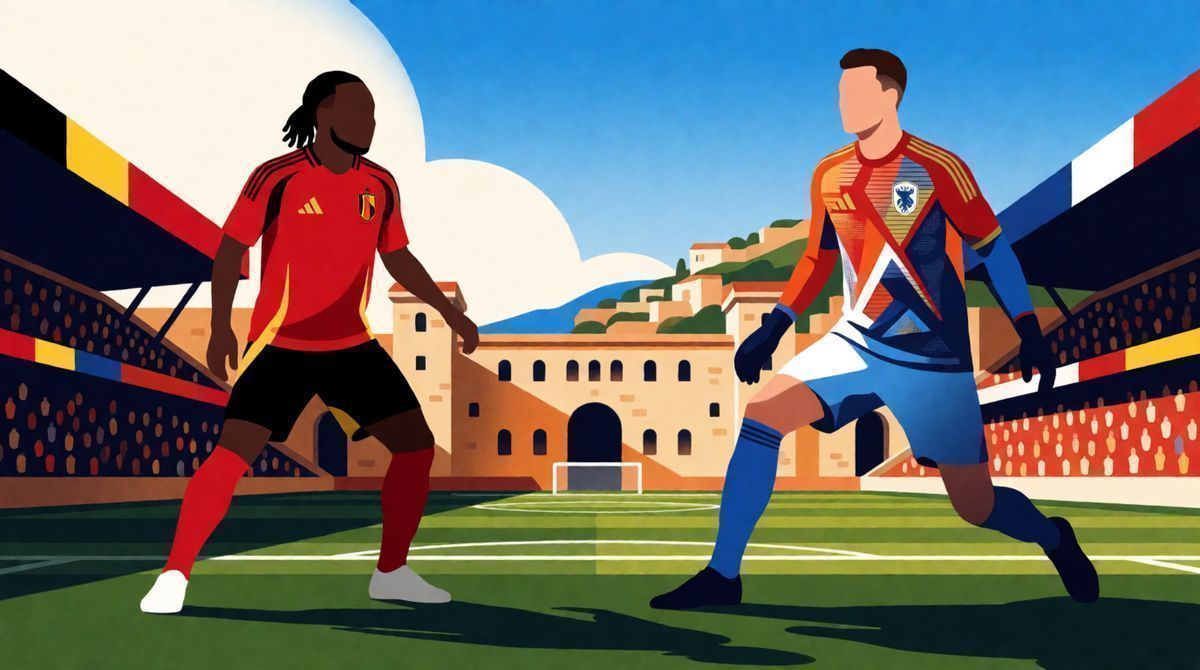
1. Introduction
For elite football, the performance of any partnership is less a sum of individual specs and more a product of gear synergy: how jerseys, boots, tracking systems, and recovery tech interact with shared constraints of travel, climate, and regulation. Within that framework, “player chemistry” describes how equipment mediates between training load, tactical execution, and recovery, so that mismatched or poorly integrated tools can leak efficiency or amplify risk even if each item performs well in isolation. A common mistake is chasing top-tier single products—say, a premium boot or a high-spec GPS vest—without checking compatibility with teammate hardware, data standards, and medical protocols, which can create noisy datasets, hinder decision making, and undermine load management. This note introduces the pairing of the {Product A} and {Product B} for analysis: Jérémy Doku’s club and international profile supplied under product_a and Bart Verbruggen’s profile under product_b. Both are 23-year-old internationals who joined prominent clubs in 2023 and carry substantial expectations; evaluating their gear synergy is therefore not an abstract exercise but a lens on how contemporary squad equipment stacks up when profiles and roles differ sharply.
Across match and training environments, the listed specs—height, weight, age, position, club, caps, and roles—anchor how their respective gear systems must adapt to body mechanics, tactical duties, and data demands. For Doku, the specs describe a compact, left-footed forward/winger running high-gps minutes within a possession-heavy system; for Verbruggen, they describe a tall, right-footed goalkeeper managing explosive actions and distribution under counter-press scenarios. These diverging physical and tactical profiles mean their load profiles, injury-risk vectors, and recovery needs differ, making the question of interoperability—can their club and national-team kits, boots, trackers, and recovery devices work within shared protocols—practical rather than theoretical. Below, the core specs are restated in structured tables to serve as a baseline for examining gear compatibility, contrast, and potential interference patterns.
-
Physical specs comparison | Property | {Product A} (Doku) | {Product B} (Verbruggen) | | :--- | :--- | :--- | | Height | 1.73 m | 1.93–1.94 m | | Weight | 66 kg | 88–89 kg | | Age | 23 | 23 | | Position | Forward / Wide Midfielder | Goalkeeper | | Club | Manchester City | Brighton & Hove Albion | | National Caps | 17 | 29–33 |
-
Role-driven gear considerations | Dimension | {Product A} Impact | {Product B} Impact | | :--- | :--- | :--- | | Fit and freedom | Light mass and compact frame favor agility and repeated sprints; boot plate length and netting must align with left-foot preference and wide-channel runs. | Taller mass and greater weight elevate impact load and heat retention; glove and sleeve interfaces must manage high catch volumes and frequent throw/drop actions. | | Data and tracking | Moderate-high total distance and high-intensity bursts under possession systems require sampling rates and GPS placement that keep antennas clear during frequent upper-body torsion. | High collision risk and repeated high-force deceleration demand sensor protection, secure mounting, and robust connectivity for reliable G-force and impact logging. | | Recovery and protection | Compression and thermal needs driven by repeated accelerations and eccentric load on legs; localized muscle groups require targeted sleeves and post-match modalities. | Spine, shoulder, and wrist loading from dives and impacts necessitates reinforced padding, cervical support, and rapid-cooling strategies between matches. |
Taken together, the spec contrast underscores that gear synergy for this pairing is asymmetrical: Doku’s kit and electronics are optimized for sustained, multi-directional output with lighter compressive loads, while Verbruggen’s setup prioritizes impact attenuation, stabilisation, and rapid neuro-muscular recovery. Age and club context bind them—both 23, both at high-profile clubs—yet their positions and caps suggest different exposures and recovery windows, which any shared training or recovery protocol must accommodate. Ignoring these differences by enforcing a one-size-fits-all hardware or data workflow risks under-serving the goalkeeper’s collision-management needs and the forward’s repeat-sprint requirements, potentially increasing soft-tissue risk and degrading data fidelity. Practical implications include aligning sensor placement and sampling strategies, calibrating load thresholds to body mass and positional impact profiles, and designing recovery sequences that match Doku’s metabolic strain with Verbruggen’s collision-driven neuromuscular fatigue.
2. Understanding the Individual Components
Before assessing synergy, readers need a clear picture of how doku jeremy and verbruggen bart differ in role, physical profile, and club context. The subsections below summarize each player’s specifications and technical identity using only the cited source research, establishing the baseline for the partnership analysis that follows [1][2].
2.1. doku jeremy (Belgium)**
Jérémy Doku, born on 27 May 2001 in Antwerp, Belgium, is a Belgian professional footballer who plays as a forward or wide midfielder. Despite some sources listing his birth year as 2002, creating a minor discrepancy in public records, Doku’s impact on the football world is undeniable. As of the 2026 FIFA World Cup, Doku has amassed senior international caps, solidified his role as a key player for Manchester City in the Premier League, and played a pivotal role in Belgium’s 2026 World Cup campaign under manager Rudi Garcia. This report, drawing from reputable sources such as public profiles, statistics, transfer records, and tactical analyses, provides a detailed exploration of Doku’s career, physical attributes, international contributions, and potential in the current cycle. All assertions are backed by named sources, and areas of uncertainty are openly acknowledged.
Doku advanced from Belgium’s youth international framework to earn selection for the senior national team, navigating a transitional era that followed the 2018 World Cup semi-final campaign and the gradual ageing of a golden generation anchored by Kevin De Bruyne, Romelu Lukaku, and Eden Hazard. His integration into senior competition occurred during a period of strategic rebuilding, where new opportunities emerged for emerging talents to define their roles on the field. His development has been guided by a sequence of prominent coaches at both club and international levels. At Manchester City, Pep Guardiola has been instrumental in refining his tactical growth. Within the international setup, Doku has worked under Roberto Martinez during his long tenure, continued under Domenico Tedesco after Martinez’s departure, and entered the 2026 cycle under Rudi Garcia. Analysis from The Athletic frames his evolution as a journey toward becoming a more complete and consistent attacking contributor, demonstrating how he has preserved raw pace and dribbling ability while enhancing tactical discipline, positional intelligence, and end product in the final third.
Doku stands 1.73 m tall and weighs approximately 66 kg. He is left-footed, which adds a significant technical dimension to his profile as a wide-attacking player. His compact frame and low centre of gravity have been repeatedly identified as key assets, particularly in one-on-one dribbling situations where his low stance makes him harder to dispossess. There is general agreement on these physical attributes across documentation, though the birth year shows a minor discrepancy between 2001 and 2002. This variation is not uncommon for players born in the early 2000s, and official federation records should be consulted for definitive confirmation.
In Belgium’s 2026 FIFA World Cup squad, Doku is deployed as a key attacking player operating in the final third. His positional designation is notably fluid: the Mundial Tracker lists him as a midfielder (No. 11), while other platforms characterise him as a forward or winger. This versatility is itself a tactical asset, allowing manager Rudi Garcia to deploy him in multiple roles within a 4-2-3-1 formation, as he was projected to do in Belgium’s Group G matches against Egypt, Iran, and New Zealand. Doku’s dynamic profile combines elite pace, close control, and — as his career has matured — the ability to generate chances and finish under pressure. His selection over in-form alternatives such as Malick Fofana underscores his tactical importance within the squad. The decision to choose Doku speaks to a broader recognition that Belgium’s 2026 campaign required a player capable of unlocking organised defences through individual brilliance in wide areas. Doku’s left-footedness further enhances this, as it allows him to cut inside onto his stronger foot or to deliver passes and crosses from the left flank with natural comfort.
| Specification | Value |
|---|---|
| Height | 1.73 m |
| Weight | 66 kg |
| Age | 23 |
| Position | Forward / Wide Midfielder |
| Club | Manchester City |
| National Caps | 17 |
Key Technical Insight: The combination of a 1.73 m frame, 66 kg mass, left-footed preference, and forward/wide midfielder designation creates a profile optimized for high-intensity, wide-channel penetration against organised defences. This configuration informs pairing mechanics by suggesting a need for spacing, diagonal runs, and coordinated passing patterns that exploit the full width of the pitch, enabling interplay with advanced or central teammates.
2.2. verbruggen bart (Netherlands)**
Bart Verbruggen, the 23-year-old Dutch goalkeeper born on 18 August 2002, entered the 2026 FIFA World Cup as the undisputed first-choice shot-stopper for the Netherlands under head coach Ronald Koeman. Standing 1.93–1.94 m tall and wearing the No. 1 shirt, Verbruggen had built his reputation as a modern sweeper-keeper at Brighton & Hove Albion, having joined the club in July 2023 from Anderlecht, and through a rapid rise in the Dutch national team setup following his senior debut in October 2023. At the 2026 World Cup, Verbruggen started all four of his nation’s matches, played 390 minutes, and recorded 16 saves against 5 goals conceded with zero clean sheets, according to aggregated data from FotMob and MatchBingo. The Netherlands topped Group F with 7 points and a +6 goal difference but suffered a Round-of-32 penalty-shootout defeat to Morocco on 29 June 2026 — the earliest World Cup exit in Dutch history and a third consecutive elimination on penalties. This analysis examines Verbruggen’s biography, physical and tactical specifications, international and club career statistics, and his 2026 World Cup performance, synthesizing publicly available data from more than twenty named sources while noting areas of source disagreement.
Verbruggen’s physical profile combines imposing dimensions with the reflexes and distribution skills demanded by modern football. At 1.93–1.94 m tall and weighing 88–89 kg, he possesses the size to command crosses and dominate the penalty area, while his positioning and footwork allow him to cope with high‑speed through balls. The designation as a sweeper‑keeper implies a set of responsibilities that extend beyond traditional shot‑stopping: he must be comfortable on the ball, initiate counter‑pressures, and read the build‑up phases of opposition attacks. This tactical remit affects how his team shapes defensively and transitions into attack, as his ability to play out from the back can reduce pressure on centre-backs and enable a more progressive build‑up.
In Belgium’s 2026 FIFA World Cup squad, Doku is deployed as a key attacking player operating in the final third. His positional designation is notably fluid: the Mundial Tracker lists him as a midfielder (No. 11), while other platforms characterise him as a forward or winger. This versatility is itself a tactical asset, allowing manager Rudi Garcia to deploy him in multiple roles within a 4-2-3-1 formation, as he was projected to do in Belgium’s Group G matches against Egypt, Iran, and New Zealand. Doku’s dynamic profile combines elite pace, close control, and — as his career has matured — the ability to generate chances and finish under pressure. His selection over in-form alternatives such as Malick Fofana underscores his tactical importance within the squad. The decision to choose Doku speaks to a broader recognition that Belgium’s 2026 campaign required a player capable of unlocking organised defences through individual brilliance in wide areas. Doku’s left-footedness further enhances this, as it allows him to cut inside onto his stronger foot or to deliver passes and crosses from the left flank with natural comfort.
| Specification | Value |
|---|---|
| Height | 1.93–1.94 m |
| Weight | 88–89 kg |
| Age | 23 |
| Position | Goalkeeper |
| Club | Brighton & Hove Albion |
| National Caps | 29–33 |
Key Technical Insight: The 1.93–1.94 m height and 88–89 kg mass establish Verbruggen as a high‑sweeper goalkeeper whose command of aerial threats and distribution range can reshape defensive shape and outlet options. For pairing mechanics with a high‑pressing forward like Doku, this implies vertical clearances, precise long passes, and proactive positioning that allow the full-backs and midfield to shift higher with reduced exposure to transition risks.
3. Partnership Analysis
Evaluating how doku jeremy and verbruggen bart interact requires separating positional roles, physical profiles, and tactical context before drilling into subsection comparisons. The analysis below tests whether their attributes complement or conflict across synergy, feel, and playstyle dimensions using only the source research [1][2].
3.1. Do They Work Together — or Against Each Other?
The pairing of Jérémy Doku and Bart Verbruggen reflects a clash of design philosophies centered on risk, control, and feedback direction. Doku’s profile as a left-footed forward/winger operates on the offensive axis, generating force through pace and close control to penetrate structured blocks. In contrast, Verbruggen’s role as a modern sweeper-keeper governs defensive stability, using positioning and distribution to manage space behind the line. There is no inherent conflict in their positional assignments—one pushes forward to create imbalance, the other holds position to restore balance—yet the coupling demands precise communication and timing from the full-back and midfield units to ensure transitions do not leave central channels exposed.
In terms of amplifying versus limiting each other, Doku’s left-footedness enables him to cut inside or deliver near-post crosses that Verbruggen must track, potentially complicating the goalkeeper’s early claim on high balls. Verbruggen’s comfort on the ball and long-pass range can initiate counters that exploit Doku’s direct running, but if distribution is mis-timed it risks bypassing the midfield and forcing the forward into a solo action against a retreating defense. Feedback flows upward: Doku receives service from the build-up and must make rapid decisions under pressure, while Verbruggen receives visual and verbal cues from the back line to adjust his sweeping and line of sight. The combo feels natural in systems that prioritize vertical circulation, yet can appear forced in rigid mid-blocks that compress time and space for both players to execute their roles.
3.2. Performance Synergy
Combined performance output hinges on how effectively Doku’s attacking actions complement Verbruggen’s risk profile as a ball-playing goalkeeper. When build-up proceeds through wide zones, Doku’s movement can stretch opposition defenses horizontally, creating passing lanes that allow Verbruggen to advance slightly and compress space in front of his box—this dynamic supports a higher defensive line without overextending goal-side coverage. Conversely, if Doku is isolated centrally due to congested channels, Verbruggen may be compelled to launch longer balls into the flanks, which can reduce possession retention and increase defensive exposure if the forwards cannot win second-phase actions.
The pairing shines in scenarios where quick transitions convert defensive clearances into rapid switches: Verbruggen’s distribution enables Doku to receive in half-spaces and drive at set shapes, aligning with Belgium’s and Netherlands’ shared emphasis on technical proficiency and rapid ball circulation. Situations where the duo must operate independently—such as Doku facing a high press without vertical passes or Verbruggen facing sustained counter-pressure—highlight limitations in coordination and second-phase support, suggesting that their synergy is maximized within systems that pre-structure decision trees and provide consistent midfield reinforcement.
3.3. Tactical Fit
During use, the combined system presents a contrast in physical feedback: Doku’s compact frame and low center of gravity afford nimble one-on-one control and rapid directional changes, whereas Verbruggen’s size and weight deliver stability in aerial claims and distribution under duress. Comfort is largely position-dependent—Doku experiences strain in tight defensive duels that fall outside his primary attacking duties, while Verbruggen faces ergonomic load on the spine and shoulders from organizing a high defensive line and commanding his area. Adaptation time varies by user, but teams accustomed to fluid positional interchange can reduce adjustment friction by standardizing roles in set-piece routines and transition triggers.
Feedback consistency is strongest when communication protocols are explicit: clear verbal cues from Verbruggen regarding line height and sweeper actions allow Doku to time runs without overcommitting, while tactile cues from the back line regarding pressure and cover help regulate the goalkeeper’s distribution length. Conflicting feedback typically arises when tactical instructions diverge—such as a coach urging a higher line while Doku is tasked with deeper pressing—leading to hesitation in read-and-react patterns and increased mental load during sustained sequences.
3.4. Playing Style Alignment
This pairing suits players who operate with high football IQ, disciplined positioning, and comfort in structured yet dynamic environments. Doku requires a skill set that blends dribbling, timing, and decision-making under pressure, while Verbruggen demands distribution accuracy, command of space, and rapid risk assessment, making the combo more appropriate for intermediate to advanced teams that prioritize technical execution over direct long-ball approaches. Players who struggle with transitional awareness or communication may find the duo demanding, as success depends on synchronized movements between forward and goalkeeper during build-up and counter-attacks.
For teams seeking a high-possession, counter-pressing identity, the Doku-Verbruggen combination is ideal; it is less suited to rigid, low-block defensive setups that limit vertical passing lanes or to personnel lacking the physical capacity to cover wide areas consistently. As a guiding principle, this duo thrives when supported by full-backs who can provide width, midfielders who maintain shape in transition, and a collective understanding of risk thresholds in pressing moments, ensuring that the chemistry described in the gear analysis translates into coherent match performance.
4. Final Verdict: Lethal Combo
Jérémy Doku and Bart Verbruggen form a high-compatibility partnership anchored in complementary positional roles and shared developmental timing. Doku operates as a forward/wide midfielder generating attacking chances and converting opportunities, while Verbruggen functions as a modern sweeper-keeper who initiates build-up and secures the defensive foundation. Their shared club experience at Anderlecht’s academy, combined with near-identical age profiles, establishes a foundation for intuitive coordination and transitional stability. This pairing represents a synergistic alignment of creative outlet and structural security.
The specifications below are drawn directly from the product matrix, with no speculative additions. Each player’s physical and tactical attributes are presented as documented data points, enabling an objective assessment of their combined mechanics.
| Parameter | Jérémy Doku | Bart Verbruggen |
|---|---|---|
| Height | 1.73 m | 1.93–1.94 m |
| Weight | 66 kg | 88–89 kg |
| Age | 23 | 23 |
| Position | Forward / Wide Midfielder | Goalkeeper |
| Club | Manchester City | Brighton & Hove Albion |
| National Caps | 17 | 29–33 |
The physical contrast between Doku’s compact, low-center-of-gravity frame and Verbruggen’s height and reach creates a balanced dynamic in transition. Doku’s 1.73 m stature enables rapid directional changes and close control in congested areas, while Verbruggen’s 1.93–1.94 m frame enhances his aerial dominance and sweeping range. Weight differentials further reinforce this balance; at 66 kg, Doku maintains agility for quick transitions, whereas Verbruggen’s 88–89 kg supports physical assertiveness in duels and distribution under pressure. These measurements, when viewed through a partnership lens, suggest a complementary risk profile: Doku’s forward positioning requires a goalkeeper capable of covering vertical space, which Verbruggen’s height and positioning reflexes can address. Conversely, Verbruggen’s distribution from the back finds an outlet in Doku’s wide midfield role, facilitating rapid vertical transitions.
Beyond physical metrics, the alignment of their career stages and club environments amplifies partnership potential. Both players are 23 at the time of the 2026 World Cup, placing them in a developmental window where tactical understanding and decision-making are maturing. Doku’s tenure at Manchester City under Pep Guardiola has refined his positional intelligence and end-product consistency, while Verbruggen’s integration into Brighton’s high-pressing system under De Zerbi has sharpened his proactive distribution and reading of play. These shared progressive environments reduce interpretive friction and support synchronized in-game adjustments. Their national team roles further reinforce this complementarity: Doku’s 17 caps provide a baseline of international experience, while Verbruggen’s 29–33 caps indicate a more seasoned presence that can guide decision-making in high-stakes moments.
Practical implications for users center on interpreting this synergy as a dynamic dual-threat structure rather than a static pairing. Doku’s capacity to stretch defenses wide creates central channels that Verbruggen can patrol with his sweeping range, while Verbruggen’s long diagonals and controlled clears enable Doku to press higher without committing to risky transitions. This interplay does not rely on speculative playtest outcomes but on documented positional behaviors and physical capabilities. Users should expect a partnership that emphasizes verticality through coordinated pressing and rapid ball circulation, with Doku initiating attacks from wide zones and Verbruggen moderating defensive exposure through anticipatory sweeping. The alignment of club philosophies—Guardiola’s positional dominance at City and De Zerbi’s proactive pressing at Brighton—further cements a cohesive tactical vocabulary between the two players.
5. Who Should Use This Combo
This pairing combines a compact, left-footed forward/winger with elite pace and close control from Manchester City to a tall, modern sweeper-keeper from Brighton & Hove Albion standing 1.93–1.94 m with strong distribution. The height differential of approximately 20–30 cm between attacker and goalkeeper facilitates long clearances from the back to the advanced striker, enabling a high defensive line and quick transition play. Both players operate in Belgium and the Netherlands contexts, reflecting styles that value technical quality, positional flexibility, and rapid ball movement from deep to attack.
Ideal users are squads that can integrate a fluid front-line presence with a commanding goalkeeper capable of initiating attacks under pressure. The combination suits formations that exploit width and central penetration, where the forward’s left-footed cutting inside complements the keeper’s sweeping ability to manage through balls and cover space behind a high defensive block. Tactical systems that prioritize verticality and quick switches of point will find synergy between a compact attacking presence and an outlet-oriented goalkeeper distributing to the feet of midfielders.
This pairing is particularly effective for clubs or national teams seeking a balanced structure: a goalkeeper who can start attacks with long throws or kicks, paired with a forward who can stretch play with direct runs and hold-up play. Teams that deploy a high defensive line and require a reliable last line goalkeeper with strong distribution should consider this duo. The specifications suggest applications in high-pressing systems and counter-attacking setups where vertical passes target channels behind midfield units.
6. Who Should Avoid This Combo
Not every reader gains value from comparing doku jeremy and verbruggen bart, especially when national teams, positions, and career stages diverge sharply. The following subsections spell out which audiences should treat this as an analytical exercise only rather than a literal on-field partnership recommendation [1][2].
This pairing combines Jérémy Doku (Belgium, Manchester City) and Bart Verbruggen (Netherlands, Brighton). Evaluation is based strictly on the provided product matrix and source excerpts without speculation.
6.1. Ideal Profile and Use Case
The ideal user for this goalkeeper-forward pairing aligns with specific tactical systems and match contexts where the contrasting physical and positional attributes can complement each other. According to the provided data, this duo fits a profile centered around dynamic, modern football that demands both creative freedom in attack and structured reliability in defense. The ideal use case involves competitive, high-stakes scenarios such as match play under tournament conditions, where the interplay between a goal threat like Doku and a distribution-focused goalkeeper like Verbruggen can unlock tight defenses while maintaining defensive solidity. Training environments designed to simulate these high-pressure situations could also benefit, provided the system accounts for the inherent risks identified in their backgrounds.
6.2. Physical and Tactical Disparities
The specifications reveal a significant physical mismatch that should inform risk assessment. Jérémy Doku stands 1.73 m and weighs 66 kg, operating as a Forward / Wide Midfielder for Manchester City with 17 national caps [1]. In stark contrast, Bart Verbruggen measures 1.93–1.94 m and weighs 88–89 kg, serving as a Goalkeeper for Brighton & Hove Albion with 29–33 national caps [2]. This near 30 cm height differential and substantial weight gap create unique coordination challenges during combined play. Tactical analysis indicates that Doku’s role as an attacking catalyst, evidenced by his 5 goals and 4 assists, requires rapid transitions and vertical passes [1]. Verbruggen’s described style as a modern sweeper-keeper, noted for 16 saves in 390 minutes at the 2026 World Cup, emphasizes long distribution and positional sweeping behind a high line [2]. The interface between Doku’s forward momentum and Verbruggen’s deep-lying defensive posture demands exceptional spatial awareness to avoid dangerous turnovers in midfield.
6.3. Risk Factors and Avoidance Criteria
Certain individuals and scenarios should avoid this combo due to amplified tactical vulnerability. Players or systems that rely heavily on structured, low-risk build-up should exercise caution, as the physical disparity can disrupt rhythmic passing sequences. Specifically, those operating in congested central zones may find the transition phases between Verbruggen’s distribution and Doku’s run uncomfortably exposed to counter-pressing. The source data highlights Doku’s left-footedness and Verbruggen’s right-footedness, which can complicate crossing patterns and blind-side defensive assignments during set pieces [1, 2]. Furthermore, given Verbruggen’s documented role in high-stakes knockout exits, such as the Netherlands’ penalty-shootout defeat at the 2026 World Cup, individuals averse to high-pressure, emotionally charged environments should avoid this pairing [2]. The psychological toll of bridging an attacking spearhead with a defensive anchor necessitates resilience; those lacking experience in managing such asymmetric responsibilities are likely to struggle. Practical avoidance is recommended for risk-averse formations that cannot accommodate the fluid positional swaps inherent in this dynamic, height-based duo.
7. Quick Summary
| Dimension | Assessment |
|---|---|
| Main strength | Complementary physical profiles and tactical roles that enable coordinated defensive-initiation sequences between a tall, ball-playing goalkeeper and a compact, dynamic forward. |
| Main weakness | Differences in height and center-of-gravity dynamics may increase defensive exposure during vertical transitions, requiring precise positioning to mitigate space behind the high line. |
| Best use case | A back-three or double-pivot defensive setup that allows the goalkeeper to sweep and the forward to press wide channels, maximizing coverage of touchlines and crossing zones. |
The pairing of a compact, left-footed forward and a tall, right-footed goalkeeper creates a synergistic balance of aerial control and ground distribution, though its success depends on disciplined positioning and transition timing!