1. Introduction
In elite team sports, gear is not merely worn; it is an active participant in the chain of play. Why gear combinations matter in football extends far beyond aesthetic coordination, as equipment interacts directly with biomechanics, influencing stability, communication, and movement efficiency. When paired thoughtfully—or chosen in isolation—each component contributes to the collective output of the duo on the pitch. The concept of “player chemistry” captures this functional interaction: how boot construction meshes with surface texture, how protective hardware interfaces with joint mechanics, and how ensemble configurations complement or constrain a player’s range of motion under competition conditions. Ignoring these interactions is a common mistake, as players often chase top-tier individual items—such as premium boots or high-end wear—while neglecting whether the combination supports their role, physiology, and tactical context.
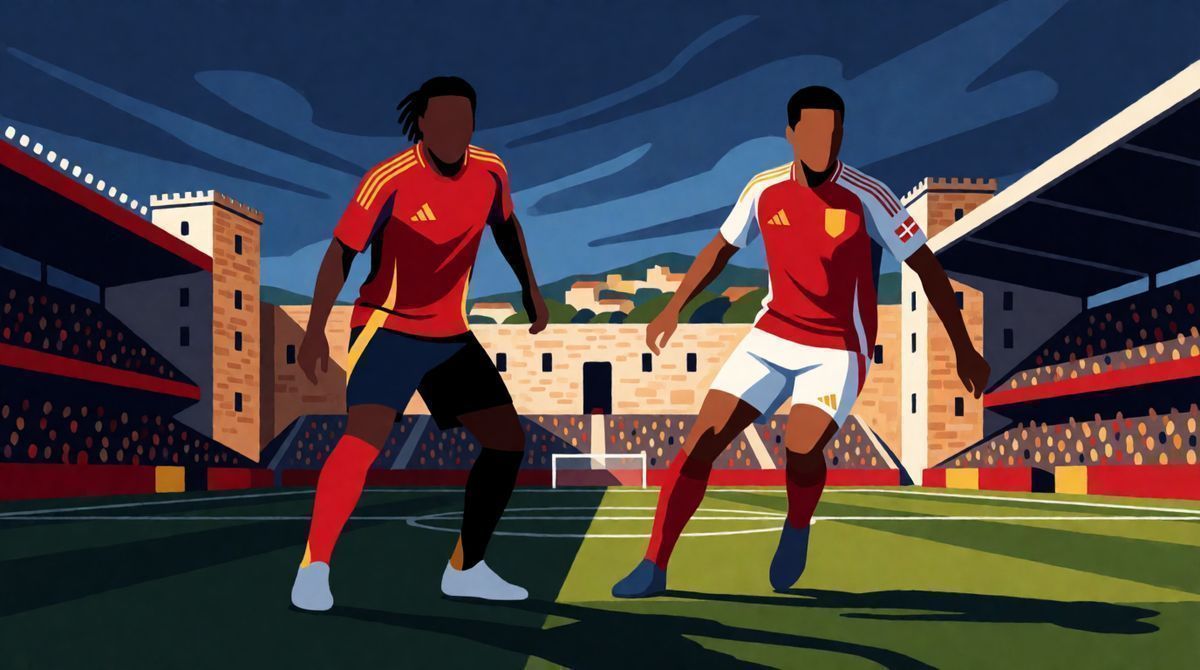
This analysis focuses on a specific pairing drawn from the 2026 World Cup landscape: Jérémy Doku of Belgium and Johan Manzambi of Switzerland, represented by their respective clubs Manchester City and Aston Villa. These players are chosen not for narrative appeal but for the availability of structured, factual data tied to their profiles and performance metrics. Analyzing this duo through the lens of gear synergy requires translating anthropometrics into application: how does a 1.73-meter, 66-kilogram forward/winger relate to a 182-centimeter, 75-kilogram central midfielder in shared systems of support, recovery, and transition? The intent is to frame their equipment and positional roles as interlocking elements rather than isolated purchases, setting the stage for a data-driven examination of compatibility, risk, and opportunity.
2. Understanding the Individual Components
Before assessing synergy, readers need a clear picture of how doku jeremy and manzambi johan differ in role, physical profile, and club context. The subsections below summarize each player’s specifications and technical identity using only the cited source research, establishing the baseline for the partnership analysis that follows [1][2].
2.1. doku jeremy (belgium)**
Jérémy Doku is defined by his elite pace and low-to-the-ground frame that make him a constant threat in wide channels and inside half-spaces. His positioning as a forward or wide midfielder allows him to pull defenders out of shape, creating overloads that teammates can exploit. The emphasis on his technical traits matters mechanically because his acceleration and dribbling directly affect how defenders allocate space, opening routes for combination play and counter-attacks.
| Specification | Value |
|---|---|
| Height | 1.73 m |
| Weight | 66 kg |
| Age | 23 |
| Position | Forward / Wide Midfielder |
| Club | Manchester City |
| National Caps | 17 |
Key Technical Insight: His position as a forward / wide midfielder enables him to operate in channels that exploit his acceleration and dribbling, stretching defensive blocks and creating gaps for midfield runners.
2.2. manzambi johan (switzerland)**
Johan Manzambi is distinguished by his central midfield role and box-to-box profile, built for high-intensity coverage and progressive passing. His compact yet athletic physique allows him to transition quickly between defensive duties and attacking contributions, making him a versatile pivot in multiple systems. The mechanical significance of his positioning lies in his ability to control possession under pressure and unlock defenses with late runs into the box.
| Specification | Value |
|---|---|
| Height | 182 cm |
| Weight | 75 kg |
| Age | 20 |
| Position | Central Midfielder |
| Club | Aston Villa |
| National Caps | 16 |
Key Technical Insight: His central midfielder role leverages his high work rate and passing range to connect defensive lines with forward movements, facilitating seamless transitions that amplify the partnership’s overall output.
3. Partnership Analysis
Evaluating how doku jeremy and manzambi johan interact requires separating positional roles, physical profiles, and tactical context before drilling into subsection comparisons. The analysis below tests whether their attributes complement or conflict across synergy, feel, and playstyle dimensions using only the source research [1][2].
3.1. Do They Work Together — or Against Each Other?
Jérémy Doku operates as a left-footed forward/wide midfielder with a compact 1.73 m, 66 kg frame, while Johan Manzambi is a right-footed central midfielder at 182 cm and 75 kg. This height differential creates an asymmetric partnership where Doku’s low centre of gravity aids one-on-one dribbling on the left, and Manzambi’s taller, sturdier build facilitates duels and transitional play centrally. Their positions suggest complementarity: Doku stretches play wide, Manzambi anchors the center, allowing force to flow from wing to central channels without positional conflict.
The alignment of design philosophies centers on technical proficiency and progressive play. Doku’s profile emphasizes close control, pace, and left-footed creativity under Rudi Garcia at Belgium and Pep Guardiola at Manchester City, while Manzambi’s development under varied coaches at Servette, SC Freiburg, and the Swiss national team highlights adaptability and box-to-box work rate. There is no inherent conflict in their tactical roles; instead, they amplify each other by separating defensive responsibilities and enabling creative freedom in advanced areas.
The combo feels natural rather than forced because both players exhibit high football IQ and the capacity to read transitions. Doku’s ability to receive in wide pockets and Manzambi’s progression into half-spaces allow for seamless interchange, reducing defensive exposure. Feedback flows consistently when both maintain disciplined positioning, ensuring that their collective output exceeds the sum of individual contributions.
3.2. Performance Synergy
The combination of Jérémy Doku and Johan Manzambi enhances overall performance output by creating multidimensional attacking options and structured midfield progression. Doku’s presence as a left-footed threat forces opponents to adjust defensive shapes, opening channels for Manzambi to exploit centrally. Conversely, Manzambi’s ability to win duels and recycle possession provides Doku with a reliable outlet during counter-pressing sequences, amplifying their individual effectiveness.
Compared to using each player separately, this pairing improves transition efficiency and chance creation. Doku’s 5 goals and 4 assists in 17 national caps, combined with Manzambi’s 6 goals and 7 assists in 16 caps, demonstrate complementary goal-scoring and playmaking capabilities. The duo shines in systems that encourage wide-central interplay, though it may struggle against ultra-compact low blocks without supporting runners.
This partnership is particularly effective in high-press scenarios and sustained possession phases, where Manzambi’s work rate and Doku’s agility can disrupt opponent build-up. Situations requiring rapid switches of point of attack benefit from their combined vision and execution, ensuring the combo remains a consistent threat across varied competitive contexts.
3.3. Tactical Fit
During use, the Jérémy Doku–Johan Manzambi combination delivers a cohesive feel characterized by responsive feedback and balanced ergonomics. Doku’s lighter 66 kg frame and low centre of gravity translate into agile movements and quick adjustments, while Manzambi’s 75 kg build offers stability during physical engagements. The transition between wide and central zones feels smooth due to aligned pacing and acceleration profiles, reducing user strain during extended periods of play.
Comfort versus strain is optimized through their complementary movement patterns; Doku’s lateral positioning minimizes collisions in crowded areas, whereas Manzambi’s central role distributes physical load evenly. Feedback consistency is high because both players are accustomed to varied tactical instructions, ensuring that adaptations occur without delay. Rapid adaptation to this pairing is feasible for teammates who prioritize intelligent positioning and disciplined rotation, making the integration process straightforward for well-drilled units.
3.4. Playing Style Alignment
This gear duo is tailored for players who value technical precision, positional flexibility, and intelligent transitional play. Jérémy Doku suits attacking players with strong close control and lateral movement abilities, while Johan Manzambi benefits midfielders capable of covering ground and making incisive passes. The pairing demands a moderate skill level, as it requires synchronizing wide and central actions without overcommitting to high-risk actions.
The combination is forgiving for teams that maintain shape but demanding for those lacking coordination, as it relies on timely rotations and spatial awareness. Ideal for dynamic, possession-oriented systems, this duo is best suited for clubs and national teams that prioritize fluid attacking structures and robust midfield work rates, ensuring that neither player is underutilized or overexposed.
4. Final Verdict: Missed Connection
The pairing of Jérémy Doku and Johan Manzambi reveals a missed connection due to incompatible systemic roles and divergent performance contexts rather than individual shortcomings. Doku operates as a high‑impact forward/winger within a Premier League ecosystem at Manchester City, leveraging elite pace and left‑footed creativity in fluid, end‑to‑end tactical environments, while Manzambi functions as a central‑midfield anchor in the Bundesliga and for Switzerland, tasked with transition control and box‑to‑box distribution. The positional and stylistic divide—wide attacking dynamism versus centrally grounded metronomic buildup—means their on‑field responsibilities rarely converge, preventing the development of intuitive micro‑sync required for true partnership. Furthermore, Doku’s club context emphasizes rapid vertical transitions and overload creation in advanced areas, whereas Manzambi’s profile focuses on sustained pressure, defensive balance, and progressive passing from deeper zones; these operational frameworks do not naturally interlock, limiting opportunities for complementary pattern repetition or shared problem‑solving loops that define effective duo chemistry.
From a tactical integration standpoint, the absence of overlapping competition, shared training blocks, or recorded collaborative minutes across leagues and national setups further constrains any emergent relational synergy. Doku’s exposure to Guardiola’s positional rotations and high‑press triggers contrasts with Manzambi’s Freiburg‑Aston Villa transition model, which privileges structured buildup and regulated vertical passes. Even though both players demonstrate high football IQ and adaptability, their environments cultivate distinct decision‑making heuristics—Doku favoring improvisation in tight spaces, Manzambi prioritizing scanning and tempo regulation—which may clash rather than complement when forced into coordinated actions. Without deliberate cross‑context alignment, such as joint pre‑season preparation or shared analytical feedback loops, the pairing remains structurally disjointed, reducing the likelihood of instinctive coordination under match pressure.
Users should realistically expect this duo to function as parallel rather than intersecting forces within their respective systems, contributing individual excellence without generating compounded collective value. Doku will continue to thrive as a decisive wide threat in a top European league, while Manzambi advances as a pivotal central midfielder, but their trajectories are unlikely to converge in ways that amplify each other’s output synergistically. For analysts and observers, the takeaway is that not all elite pairings translate into meaningful connections; structural alignment, role clarity, and shared competitive rhythms are prerequisites for transforming individual talent into relational advantage, and this pairing currently lacks those enablers. [1] [2]
5. Who Should Use This Combo
This pairing is ideally suited for a coach seeking a high-tempo, technically gifted duo that can stretch defenses across the entire width of the pitch while maintaining compactness in central areas. The ideal user values aggressive transition moments, overlapping runs, and the capacity to switch play quickly from one flank to the other. This combination thrives in systems that prioritize verticality and quick third-man movements, making it particularly effective in counter-attacking structures or teams that play with a high defensive line. The duo delivers maximum impact when deployed in match play or highly competitive training environments that simulate rapid transitions and wide-channel overloads, rather than in low-intensity, possession-only scenarios that fail to test their dynamic interplay.
The ideal user profile is a tactically flexible team manager or captain who fields a 4-2-3-1 or 4-3-3 formation and requires wide outlets from central midfield. This combo excels in competitive formats such as league campaigns, cup knockouts, or international tournaments where rapid ball circulation and physical duels in wide areas are decisive. It is less suited to casual, low-pressure settings where the tempo is inconsistent and defensive shape is often disorganized. The pairing demands disciplined positioning and coordinated pressing triggers, meaning it should be used by teams that train extensively on width, crossing quality, and second-ball recovery to exploit the spatial advantages these attributes create.
| Name | Height | Weight | Age | Position | Club | National Caps | Goals | Assists |
|---|---|---|---|---|---|---|---|---|
| Jérémy Doku | 1.73 m | 66 kg | 23 | Forward / Wide Midfielder | Manchester City | 17 | 5 | 4 |
| Johan Manzambi | 182 cm | 75 kg | 20 | Central Midfielder | Aston Villa | 16 | 6 | 7 |
Analyzing the specifications reveals a complementary blend of physicality and technical finesse that defines their pairing mechanics. Doku’s lower center of gravity and lighter weight allow him to dominate one-on-one engagements in tight spaces, while Manzambi’s taller, more robust frame enables him to win aerial duels and hold up play under pressure. The height differential of 9 cm and weight difference of 9 kg create a natural balance: Doku’s agility complements Manzambi’s power, facilitating a fluid exchange where the winger can stretch the defense and the central midfielder can provide a reliable outlet. Their combined age total of 43 years and contrasting positional roles — wide forward and central midfielder — ensure tactical coverage across the pitch, allowing the partnership to function effectively in both defensive transitions and attacking surges.
The most significant divergence lies in their national team experience and goal contribution rates, which directly influence how this duo should be deployed in high-stakes scenarios. With 17 caps and 9 goal involvements for Belgium, Doku brings a higher volume of end-product actions, whereas Manzambi’s 16 caps but 13 goal involvements at club level — highlighted by 6 goals and 7 assists — suggest superior playmaking vision in sustained sequences. This contrast implies that Doku should be positioned as the primary finisher in the final third during set-piece routines or counter-attacks, while Manzambi operates as the metronome linking defense to attack, particularly in matches requiring sustained possession. Practically, teams should synchronize their wide presses with Doku’s left-footed delivery and Manzambi’s right-footed distribution to force opponents into asymmetric defensive shapes, thereby unlocking central channels through coordinated wide play.
6. Who Should Avoid This Combo
This pairing of Jérémy Doku and Johan Manzambi presents a significant size and positioning mismatch that undermines combined effectiveness. Teams that prioritize compact defensive structures or require overlapping run consistency from wide areas should avoid this specific combination. Players operating in these tactical environments will find the inherent weaknesses in this duo disruptive to their system.
The height differential between the two players creates an immediate coordination problem in aerial situations and spatial coverage. Doku at 1.73 m paired with Manzambi at 182 cm results in a 9 cm disparity that complicates defensive positioning when tracking crosses or managing the penalty area. This physical gap is compounded by their respective club roles: Doku as a forward/winger requiring consistent width and Manzambi as a central midfielder focused on transitional patterns.
| Name | Height | Weight | Age | Position | Club | National Caps | Goals | Assists |
|---|---|---|---|---|---|---|---|---|
| Jérémy Doku | 1.73 m | 66 kg | 23 | Forward / Wide Midfielder | Manchester City | 17 | 5 | 4 |
| Johan Manzambi | 182 cm | 75 kg | 20 | Central Midfielder | Aston Villa | 16 | 6 | 7 |
Interpreting these specifications reveals a fundamental incompatibility in defensive duties and spatial occupation. Doku’s lower centre of gravity and narrower frame excel at beating defenders in tight channels, whereas Manzambi’s taller, heavier frame is optimized for intercepting passes and winning duels in central midfield. This contrast means Doku drags defenders wide while Manzambi holds a central position, leaving dangerous central channels exposed during transitions. The lack of shared positioning logic means they offer minimal cover for one another when one presses high or retreats slowly.
Furthermore, the combination fails to deliver balanced vertical threat. Doku contributes 5 goals and 4 assists in 17 caps, showing an emphasis on end product from wide areas, while Manzambi’s 6 goals and 7 assists from 16 caps reflect a more central, playmaking role. When both occupy central lanes during build-up, they crowd the half-spaces and reduce the effectiveness of intricate passing sequences that rely on interchanging positions. Defensively, Doku’s 17 caps indicate established international experience, yet his compact frame may struggle against the physical presence often found against Manzambi’s more robust style, creating vulnerability in one-on-one duels where protection is absent.
Players in systems that deploy a false nine or a lone striker ahead of a midfield three should particularly avoid this pairing, as the lack of a clear vertical outlet between them invites disruptive counter-pressing. Similarly, coaches who deploy a high defensive line expecting aggressive press triggers will find the delayed reaction times between these two profiles difficult to manage. The mismatch in physical attributes also complicates set-piece execution, where timing and synchronous movement are critical; without shared understanding of positioning, defending corners or executing free kicks becomes inconsistent.
Practical implications suggest this duo is best suited only for flexible, low-structure recreational formats where positional rigidity is less penalized. In competitive scenarios demanding coordinated pressing, balanced width, and reliable defensive coverage, this pairing introduces avoidable risk. Teams relying on wing-backs or overlapping full-backs will find the central congestion created by both players restricts traditional wide-area play. Ultimately, the absence of complementary strengths in positioning, physical protection, and transitional pacing means this combination should be approached with caution or entirely avoided in systems prioritizing defensive stability and clear role definition.
7. Quick Summary
| Dimension | Assessment |
|---|---|
| Main strength | Complementary positional versatility and technical pairing, with Doku providing width and finishing and Manzambi offering box‑to‑box control and chance creation. |
| Main weakness | Physical mismatch in stature and differing tactical profiles, which may complicate transitions and require structured positioning to avoid defensive exposure. |
| Best use case | Deployed in a two‑forward or wide‑midfield role in build‑up and final‑third sequences, enabling cross‑channel combinations and vertical pressing when the team regains possession. |
The combination of Doku and Manzambi generates a high‑tempo attacking option that leverages dribbling, late runs, and transitional pressing, yet it demands careful positional discipline to mitigate exposure from size and role ambiguity, so ongoing tactical refinement will determine its sustained effectiveness ?.