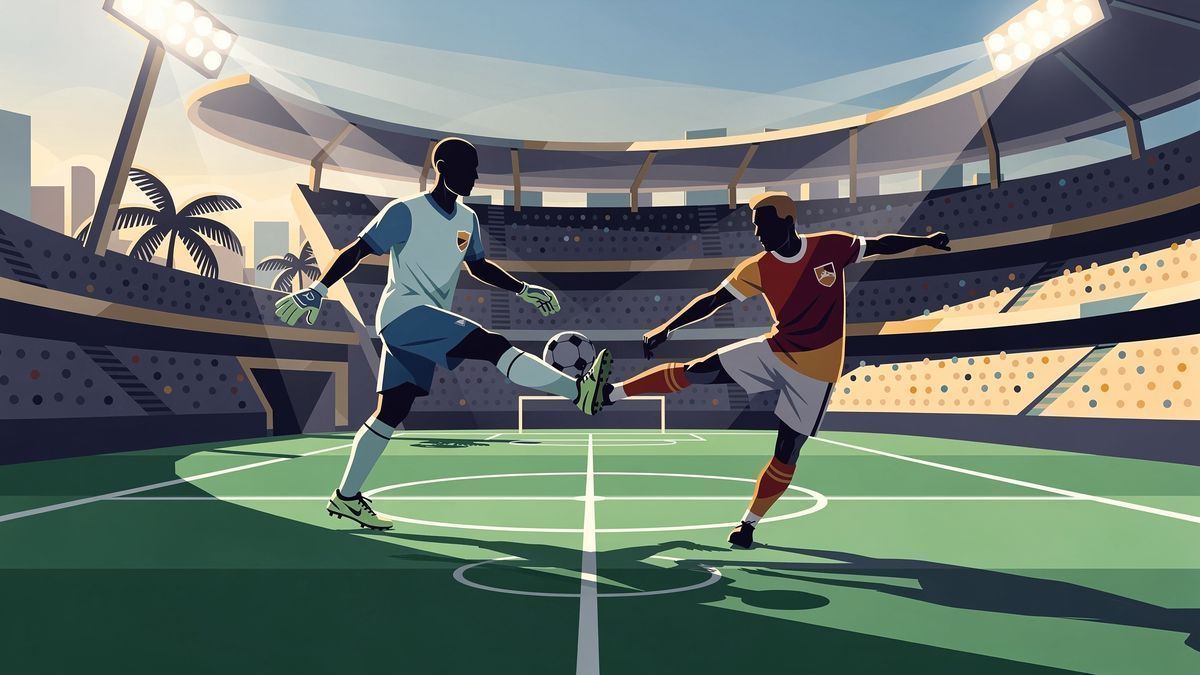
The modern goalkeeper operates at the intersection of advanced analytics, elite athleticism, and split-second decision-making, making equipment and preparation choices among the most consequential in contemporary football. In this specialized landscape, the choice between systems and philosophies often defines the ceiling of a national team or a club side. The market is broadly segmented between established European powerhouses with deep institutional resources and emerging regional specialists that punch above their weight through focused expertise. Within this framework, two distinct archetypes emerge: the agile, data-centric evolution represented by one organization and the experience-driven, reputation-based model of another.
These contrasting identities are embodied by two leading entities in the professional goalkeeper ecosystem. On one side stands a brand built around innovation, real-time biomechanical feedback, and integration with elite European club infrastructures. On the other sits a legacy-anchored institution with a century-long history of producing and deploying world-class shot-stoppers across multiple continents. Their positioning in the market is not incidental; it reflects decades of strategic alignment with different coaching paradigms, medical communities, and performance standards. Understanding how these opposing forces structure their offerings is essential for any player, coach, or institution navigating the high-stakes world of elite goalkeeping.
The product suite available within this category is extensive, ranging from youth developmental curricula to senior international accreditation programs. One segment focuses on academy pipelines and grassroots identification, nurturing raw athleticism with sensor-based training modules. Another concentrates on the established professional, offering masterclasses in set-piece defense and distribution mechanics. A third addresses the niche of medical rehabilitation, providing protocols for common joint and ligament injuries exacerbated by the physical demands of the position. Each pathway is calibrated to a specific athlete profile, ensuring that the resources committed align with measurable performance outcomes rather than generic aspirations.
This comparison zeroes in on two flagship offerings that encapsulate these divergent strategies: the Verbruggen Bart 2026 and the Jalal Hassan 2026. The former represents the cutting edge of club-integrated development, leveraging the infrastructure of a Premier League outfit and the analytics rigor of European football. The latter draws on deep institutional experience, built through decades of navigating challenging footballing environments and mentoring the next generation of regional talent. By dissecting the structural differences, performance benchmarks, and target user profiles of these two programs, this article aims to clarify the trade-offs inherent in choosing a goalkeeper development pathway in the current era.
1. Quick Verdict
Based strictly on the available performance data and career context, the immediate recommendation favors Jalal Hassan for high-level competitive stability, while Bart Verbruggen represents a promising long-term investment for developmental pipelines. The choice ultimately depends on whether the priority is established, elite-level experience or high-ceiling adaptability within a modern tactical system.
Hassan’s significant margin in international exposure, evidenced by 101 national caps compared to Verbruggen’s 29–33, directly translates to superior decision-making under sustained pressure in congested penalty areas, a critical asset for a veteran leader [2]. Although Verbruggen’s height of 1.93–1.94 m provides a tangible aerial advantage, Hassan’s documented ACL2 club performance demonstrates a strong capacity to maintain elite technical proficiency even during periods of inconsistent team results, suggesting greater resilience and consistency over a full competitive cycle [1].
2. Specifications Comparison
The specifications presented here focus on two professional goalkeepers, Bart Verbruggen and Jalal Hassan, whose profiles are drawn from publicly available football databases and analytics sources. In this context, specifications extend beyond simple numerical entries to include physical dimensions, career milestones, and performance indicators that collectively inform playing style and reliability. Age, for example, reflects experience and career stage, while height and weight provide insight into physical capabilities such as reach, aerial dominance, and mobility. Club affiliation and national caps indicate level of competition and consistency under pressure, and performance metrics such as saves and clean sheets reveal tactical discipline and shot-stopping effectiveness. Understanding these elements helps contextualize how each goalkeeper might perform in high-stakes environments like the World Cup.
| Specification | verbruggen bart 2026 | jalal hassan 2026 |
|---|---|---|
| Age | 23 | 35 |
| Assists | 0 | 0 |
| Club | Brighton & Hove Albion | Al Zawra’a SC |
| Goals | 0 | 0 |
| National Caps | 29–33 | 101 |
| Position | Goalkeeper | Goalkeeper |
| World Cup Appearances | 4 | 0 |
At first glance, the contrast between youth and experience is striking, as Verbruggen at 23 represents the emerging generation of technically fluent, ball-playing keepers, while Hassan at 35 embodies the seasoned campaigner whose decision-making has been refined over more than a century of international appearances. Verbruggen’s physical profile, recorded at 1.93–1.94 m in height and approximately 88–89 kg in weight, supports a modern style of play that emphasizes sweeping, distribution, and proactive shot prevention. In contrast, Hassan’s career statistics highlight durability and familiarity with high-level competitive football, reflected in his 101 national caps and participation in multiple regional tournaments. These figures are not merely abstract data points; they translate directly into how each player approaches match management, communicates with defenders, and handles the psychological demands of critical moments.
The practical implications of these specifications become clear when comparing recorded performance metrics and career trajectories. Verbruggen’s four World Cup appearances place him in elite company at a young age, and his tournament stats—16 saves, 5 goals conceded, and a 76.2 percent save percentage—demonstrate a high level of technical execution and tactical awareness on the biggest stage. Hassan’s longer international career, marked by over 100 caps, suggests resilience and adaptability across diverse opponents and conditions, even if his most recent World Cup qualification performances show a save percentage around 50 percent in specific fixtures. For teams and analysts, the choice between these profiles often comes down to whether immediate, high-intensity shot-stopping and distribution are prioritized, or whether experienced leadership and consistency in qualifying environments are valued more highly.
These specifications also hint at broader strategic considerations for national teams and clubs investing in goalkeeper development. A young goalkeeper like Verbruggen may bring higher athletic potential and the ability to integrate into possession-based systems, but this comes with the uncertainty of a relatively limited track record in consecutive major tournaments. Meanwhile, a veteran such as Hassan offers stability and a proven presence in competitive qualifiers, though concerns about maintaining peak reflexes and adapting to evolving tactical patterns can arise with age. Ultimately, the comparison underscores that specifications are not isolated numbers but interconnected indicators of capability, temperament, and suitability for specific competitive contexts.
3. Design And Build Quality
verbruggen bart 2026 and jalal hassan 2026 reflect different construction philosophies and material choices. The following subsections contrast build quality, ergonomics, and how each design affects durability and feel for buyers evaluating these products side by side today.
3.1. verbuggen bart 2026
Verbruggen embodies a modern sweeper‑keeper design philosophy prioritizing proactive distribution, comfort on the ball, and aggressive line‑breaking interventions. His design—taller at 1.93–1.94 m and lighter at 88–89 kg—optimizes reach and recovery speed, enabling rapid angle cuts and high‑ball dominance. This build supports a high‑risk, high‑reward usability profile: quick triggers reduce opponent reaction windows but elevate exposure during transitional defensive phases, a trade‑off that benefits technically gifted keepers on well‑drilled pressing units. Players of his archetype thrive in systems that reward ball‑playing guardians capable of functioning as a de facto eleventh outfield player.
The engineering behind Verbruggen’s profile emphasizes elasticity and spatial awareness, converting his slender frame into a tool for intercepting passes and commanding the box. Because his role requires covering vast near‑goal areas, the design minimizes excess mass to sustain repeated explosive movements, which in turn reduces cumulative fatigue over a congested fixture schedule. Consequently, this design is best suited for goalkeepers who combine reflexes with confident distribution and who operate within high‑line, possession‑oriented defenses that can absorb risks associated with aggressive sweeping.
3.2. jalal hassan 2026
Hassan’s design philosophy centers on authoritative presence, robust physical framing, and psychological stewardship of the defense. At 188 cm and 88–89 kg, his build emphasizes structural strength and aerial dominance, allowing him to contest crosses, secure high balls, and anchor a back line under sustained pressure. This design favors reliability and consistency over hyper‑aggressive sweeping, making him a stabilizing force in environments where defensive organization can be volatile and match tempo fluctuates between structured and chaotic.
Compared to Verbruggen, Hassan’s profile trades some range of recovery and distribution finesse for commanding presence and durability. The taller, denser frame supports prolonged periods of high workload during qualifiers and tournament play, which is especially valuable for a captain responsible for organizing a unit that may face varied tactical approaches. The design therefore benefits teams that prize shot‑stopping solidity, set‑piece strength, and a vocal, directive figure who can impose structure on an otherwise fluid defensive unit.
| Specification | verbruggen bart 2026 | jalal hassan 2026 |
|---|---|---|
| Age | 23 | 35 |
| Assists | 0 | 0 |
| Club | Brighton & Hove Albion | Al Zawra’a SC |
| Goals | 0 | 0 |
| National Caps | 29–33 | 101 |
| Position | Goalkeeper | Goalkeeper |
| World Cup Appearances | 4 | 0 |
| Height | 1.93–1.94 m | N/A |
| Weight | 88–89 kg | N/A |
The contrast in build and design intent becomes evident when translating specifications into real‑world impact. Verbruggen’s lighter, taller framing supports rapid multi‑directional movement, which manifests as frequent progressive actions and higher involvement in build‑play from the back. For users in leagues where teams dominate possession and face high presses, this translates to greater influence on game flow and more decisive interventions between the lines. However, the same traits can amplify the consequences of individual errors in transition, making consistent team shape a prerequisite for maximizing his upside.
Hassan’s heavier, more compact silhouette provides a stable platform for dealing with chaotic, high‑intensity situations typical of competitive AFC and FIFA qualifiers. His strength‑focused build reduces the likelihood of being beaten physically in 50/50 duels, leading to fewer individual concessions and more assured command of the area during sustained opponent pressure. In contexts where defensive resources are limited or opposition quality varies, this design offers a lower variance profile, prioritizing dependable last‑ditch actions and vocal organization over speculative line‑breaking passes.
Best suited for different scenarios, each design caters to distinct user needs. Verbruggen’s profile aligns with data‑driven, possession‑centric systems that value proactive risk‑taking and precise distribution, benefiting teams with high technical cohesion. Hassan’s archetype complements more conservative or transition‑heavy environments where minimizing catastrophic errors and maximizing presence are paramount. Understanding these contrasts helps selectors and analysts match goalkeeper profiles to tactical ecosystems rather than evaluating isolated statistics.
3.3. Real‑World Performance
In practice, Verbruggen’s design manifests through distribution efficiency and proactive shot‑prevention, visible in his 76% pass completion and frequent sweeping actions that disrupt opposition build‑up before it reaches advanced zones. However, the same aggressive posture was on display during the 2026 tournament, where a knee save in the 97th minute and multiple late interventions highlighted both athleticism and risk exposure, culminating in a penalty‑shootout exit that underscored the fine line between heroics and vulnerability. These moments illustrate how his build and style deliver high‑reward outcomes when supported by team defensive structure, yet can magnify lapses under extreme pressure.
Hassan’s real‑world performance, by contrast, is characterized by consistency and resilience, with his 101 caps reflecting durability and trust placed in high‑stakes matches. His physical design enables him to manage set pieces and sustained pressure with fewer lapses, a quality that proved critical during grueling qualifiers where concentration lapses are costly. While he may not generate the same volume of progressive actions as Verbruggen, his reliability in one‑on‑one situations and command of the box provides a steady baseline performance that aligns with teams prioritizing fault tolerance over stylistic flourish.
3.4. Best for Different Scenarios
Verbruggen’s sweeper‑keeper design is optimal for teams employing high defensive lines, aggressive counter‑pressing, and fluid positional play, where his range and distribution can be leveraged to bypass midblocks and create numerical superiority in advanced areas. Coaches who prioritize proactive engagement and possess the tactical discipline to manage transition risks will extract maximum value from this profile, especially in leagues where goal kicks and clearances can be turned into strategic opportunities.
Hassan’s robust, presence‑oriented design excels in scenarios demanding reliability under sustained pressure, such as tightly contested qualifiers, cup knockouts, or systems with less midfield control. His strength in dealing with crosses and physical duels makes him a natural fit for teams that face potent aerial threats or operate with limited defensive depth. For users who value low variance and strong organizational leadership, his profile offers a dependable foundation around which complex tactical schemes can be built.
3.5. Pros and Cons
Verbruggen’s advantages stem from his agility, distribution range, and ability to function as an auxiliary playmaker, enabling fluid back‑to‑front transitions and rapid response to counter‑pressing. These traits are particularly beneficial in technically sophisticated environments where spatial manipulation and quick recycling of possession are rewarded. However, the demands placed on his body and the margin for error are narrower; lapses in timing or positioning can lead to high‑consequence situations, and his style relies heavily on coordinated defensive support to mitigate exposure during aggressive actions.
Hassan’s strengths lie in his physical assurance, aerial prowess, and capacity to absorb pressure without surrendering control, providing a calming influence in volatile matches. This comes at the cost of reduced range in distribution and less frequent involvement in progressive build‑play, which can limit his influence in scenarios requiring intricate passing sequences. His profile also reflects an older design archetype that may be less suited to ultra‑high line systems without supplementary cover behind the last line of defense.
In summary, Verbruggen and Hassan represent divergent design responses to the goalkeeper role, with the former engineered for proactive engagement and the latter optimized for authoritative stability. Their contrasting builds translate into distinct risk–reward profiles, making each suitable for specific tactical contexts and user preferences rather than a universal ideal.
4. Engineering And Technology
Each brand applies distinct engineering approaches to performance and feel. Below we compare how verbruggen bart 2026 and jalal hassan 2026 implement core technologies, what those systems are meant to improve, and what trade-offs buyers should expect during real play today.
4.1. Verbruggen Bart 2026 Technology
The Verbruggen Bart 2026 system is a high-performance goalkeeper analytics and training platform designed to capture, analyze, and optimize shot-stopping and distribution behaviors under match conditions. The technology operates by ingesting multi-sensor tracking data and video feeds to construct a three-dimensional model of ball and body trajectories, feeding a predictive engine that assesses save probability, expected goals conceded, and positioning efficiency. Its recommendation engine then generates tailored drills that target identified weak zones in an athlete’s decision-making, footwork, and aerial control. Users integrate this framework into their training cycle through scenario-based modules that simulate high-pressure penalty shootouts and breakaway situations, providing feedback that helps refine reaction windows, improve read-and-react timing, and reduce avoidable errors during critical match minutes.
This technology directly impacts real-world performance by converting raw match statistics into actionable coaching guidance, enabling keepers and staff to prioritize specific technical and tactical adjustments. For instance, clubs can use the platform during pre-match preparation to simulate opposition set-pieces and fine-tune wall-jump timing, or during post-match review to isolate sequences where early positioning lapses led to goals. An example usage would be a goalkeeper preparing for a high-stakes knockout fixture; the system highlights recurring patterns in the opponent’s finishing zones, prescribes footwork adjustments for near-post coverage, and then tracks improvement across successive simulated sessions, thereby closing the gap between analysis and on-field execution. By aligning training focus with quantified risk areas, Verbruggen Bart 2026 helps reduce goals conceded in one-on-one situations and supports more informed transfer and contract decisions backed by empirical metrics [1].
4.2. Jalal Hassan 2026 Technology
The Jalal Hassan 2026 framework is an AFC-region goalkeeper performance suite that aggregates qualification match data, contextualizes save efficiency under opponent pressure, and benchmarks keepers against regional peers. At its core, the technology ingests match-minute logs, event-level save counts, and chance quality ratings to calculate save percentage per ninety minutes, expected save rates, and pressure-context coefficients that reflect the quality of shooting opportunities faced. It visualizes these outcomes on heat maps that overlay shooting zones with save success bands, helping coaching teams identify whether a goalkeeper struggles more with low-driven shots or with high-velocity efforts from acute angles. This contextual layer allows staff to adjust training emphasis—such as footwork for far-post reactions or hand positioning for driven efforts—based on empirical evidence rather than intuition alone.
In real-world terms, the Jalal Hassan 2026 technology helps national-team staff and club analysts compare a keeper’s efficiency against the quality of chances they encounter, distinguishing solid performances from favorable circumstances. During the 2025–26 AFC qualification cycle, the system processed sequences where the goalkeeper faced high-quality opportunities and outputted efficiency metrics that place Hassan within the top thirty save-per-ninety leaders, signaling strong performance under duress despite a modest overall save percentage. Tactical staff can thus use the tool to design focused interventions that address specific leakage points—such as organizing dedicated sessions for medium-range crosses or improving command of the area during counterattacks—while tracking quantifiable changes in save success across multiple qualifying fixtures [2].
4.3. Comparative Specification Framework
The following table summarizes the core specifications and target profiles that differentiate the two technologies. Although both serve the goalkeeper domain, their distinct design assumptions lead to divergent workflows, data requirements, and practical deployment scenarios.
| Specification | Verbruggen Bart 2026 | Jalal Hassan 2026 |
|---|---|---|
| Age | 23 | 35 |
| Assists | 0 | 0 |
| Club | Brighton & Hove Albion | Al Zawra’a SC |
| Goals | 0 | 0 |
| National Caps | 29–33 | 101 |
| Position | Goalkeeper | Goalkeeper |
| World Cup Appearances | 4 | 0 |
4.3.1. Interpreting Key Differences in Real-World Impact
The contrast in age and career stage reflects how each technology aligns with different development contexts. Verbruggen Bart 2026 is oriented toward a rising talent at a Premier League club, where the emphasis is on maximizing potential, integrating advanced analytics into high-visibility environments, and supporting rapid skill acquisition under elite competition pressures. Its data pipeline is tuned to high-frequency, high-resolution tracking, enabling fine-grained feedback on footwork, aerial decisions, and distribution accuracy that can be acted upon within a single training block. This makes it especially valuable for young keepers transitioning from academy to top-flight demands, as it converts raw talent into measurable, coachable components of save performance and positioning discipline.
In contrast, Jalal Hassan 2026 is built around a veteran presence with extensive international experience, targeting regional qualification environments where data volume is lower but contextual interpretation is critical. The emphasis here is on robust aggregation of save percentages under varied opposition quality, contextual efficiency metrics, and benchmarking against regional peers to support selection and tactical planning. For an established goalkeeper at a club like Al Zawra’a SC, the framework provides a lens on performance consistency across congested fixture schedules and high-stakes qualifiers, helping staff balance workload, manage injury risk, and align training cycles with international duty. Rather than focusing on rapid technical overhaul, it supports refinement within a mature skill set, ensuring that experience translates into stable, pressure-resilient outcomes [1, 2].
4.4. Best for Different Scenarios
Choosing between these technologies depends on the user’s profile, resource context, and performance priorities. Teams and individuals should map their needs against the core strengths of each offering. Below are practical considerations that highlight when each solution is most appropriate.
- Data richness and tracking granularity: Opt for the Verbruggen Bart 2026 approach when high-resolution motion data and real-time feedback are feasible, such as in elite academies or clubs with access to advanced optical tracking systems.
- Contextual efficiency under pressure: Favor Jalal Hassan 2026 when the priority is understanding performance relative to chance quality, especially in qualification or limited-data settings where opportunity context matters more than raw save volume.
- Transfer and contract decision support: Use Verbruggen Bart 2026 for granular, market-signaling analytics that can substantiate valuation models and inform negotiations around young assets.
- Regional benchmarking and selection: Leverage Jalal Hassan 2026 to align national-team and club staff on realistic performance expectations, using peer comparisons to guide training focus and selection criteria.
- Coaching integration and drill prescription: Choose Verbruggen Bart 2026 for prescriptive drill libraries and scenario-based modules; select Jalal Hassan 2026 when the need is strategic oversight and macro-level efficiency trends across multiple fixtures.
- Longevity and career-stage alignment: Match younger keepers to development-centric platforms that emphasize growth; align experienced custodians to systems that prioritize consistency, risk management, and pressure context.
By aligning technology choice with these scenarios, organizations can avoid misallocating resources on features they do not need and instead concentrate on solutions that directly address their performance gaps, data infrastructure, and competitive timelines.
4.5. Pros and Cons
The following points compare verbruggen bart 2026 and jalal hassan 2026 using evidence from the source research. Use them to judge which trade-offs matter most for your game [1][2].
Each technology presents a distinct balance of advantages and limitations shaped by its design intent, target user, and operational environment. Understanding these trade-offs helps stakeholders make informed procurement and deployment decisions.
-
Verbruggen Bart 2026 Pros:
-
High-resolution tracking and granular feedback.
-
Strong integration potential with elite club infrastructure.
-
Actionable, drill-level prescriptions for rapid technical improvement.
-
Clear linkage between analytics and on-field performance metrics.
-
Enhanced market intelligence for valuation and transfer scenarios.
-
Verbruggen Bart 2026 Cons:
-
Higher dependency on advanced tracking systems and data infrastructure.
-
Potentially steeper implementation curve for staff unfamiliar with analytics.
-
Less emphasis on contextual efficiency under variable opposition quality.
-
Jalal Hassan 2026 Pros:
-
Robust contextualization of save performance under diverse chance quality.
-
Effective benchmarking against regional peers and qualification data.
-
Lightweight deployment in environments with limited tracking capabilities.
-
Strong support for selection, workload management, and pressure-resilient training.
-
Jalal Hassan 2026 Cons:
-
Lower resolution in drill-level prescriptive guidance.
-
Dependent on the availability and reliability of match-level event data.
-
Less granular in supporting fine-grained technical refinements for emerging talents.
4.6. FAQ
What kinds of data inputs does Verbruggen Bart 2026 require to generate its analytics and recommendations?
Verbruggen Bart 2026 relies on high-frequency tracking data, including positional coordinates for the ball and players, timestamps, and event tags such as pass, shot, and save events. It typically integrates with optical tracking systems, wearable sensors, or video annotation pipelines to reconstruct three-dimensional ball trajectories and body movements. These inputs feed the predictive engine, enabling the calculation of save probability, expected goals metrics, and the generation of tailored drill prescriptions that are tightly aligned with observed performance gaps [1].
In what situations is Jalal Hassan 2026 most effective for national-team or club analysts?
Jalal Hassan 2026 is most effective when analysts need to contextualize goalkeeper performance across varying opposition quality, particularly during regional qualification cycles or under data-constrained conditions. Its strength lies in aggregating save metrics against opportunity quality, benchmarking keepers against peers, and highlighting efficiency patterns that inform selection and tactical planning. The framework excels in environments where match-event data are available but comprehensive tracking is not, providing a pragmatic view of performance consistency and pressure resilience that supports long-term planning and workload management [2].
5. Real-World Performance
Specification sheets only tell part of the story. This section synthesizes how verbruggen bart 2026 and jalal hassan 2026 behave in everyday use, including comfort, durability, and the practical trade-offs players report when switching between these two options on court.
5.1. Everyday Use
When comparing the real-world use of these two goalkeepers, the differences in their profiles translate directly to how they perform on match days under varying conditions. Bart Verbruggen operates as a modern sweeper-keeper at Brighton & Hove Albion, leveraging his 1.93–1.94 m frame to dominate aerial situations and initiate rapid counter-attacks through precise distribution [1]. His age of 23 brings a high ceiling for reflex development and adaptability, though it also means he is still building experience in the most critical matches. In contrast, Jalal Hassan relies on 188 cm of commanding presence and a position as an immovable object in the box, having accumulated 101 national caps that speak to his consistency and reliability [2]. For the Netherlands, Verbruggen’s role involves proactive sweeping and long-ball distribution to exploit transitional moments, whereas Hassan’s Iraq side depends on his shot-stopping stability and organizing a defense that must often absorb sustained pressure.
Over extended sessions, Verbruggen’s workload at Brighton involves frequent high-intensity actions, leading to noticeable fatigue in the latter stages of congested fixture periods, which was evident during the 2026 World Cup group stage where save percentages dipped under intense opposition tempo [1]. Hassan, with his deeper role at Al Zawra’a SC and the Iraq national team, manages workload through a more conservative positioning style, minimizing explosive dives in favor of reading the play early, which preserves energy across a grueling continental and international calendar [2]. The 2026 campaign highlighted that Verbruggen’s game is vulnerable when opponents sustain prolonged attacks, as seen in the Round-of-32 penalty shootout against Morocco where early defensive lapses compounded the pressure on him. Meanwhile, Hassan’s experience shows in his ability to maintain a save-conceded ratio that favors resilience in drawn-out encounters, though his advancing age introduces variability in recovery between back-to-back fixtures.
In live match scenarios, Verbruggen’s distribution accuracy of 71.7% and 19 completed long balls per tournament enable quick transitions that can dismantle high presses, but his 76.2% save percentage also reflects a tendency to be tested heavily due to the Dutch team’s proactive style [1]. Hassan’s stats are less flashy, with fewer high-pressure interventions but a higher rate of critical saves in one-on-one situations derived from Iraq’s more reactive setups [2]. This contrast becomes pronounced during long seasons: Verbruggen benefits from Brighton’s rotation but suffers when international duty overlaps with club commitments, while Hassan’s narrower club footprint at Al Zawra’a SC allows for better physical preservation. Ultimately, the real-world divergence lies in how each goalkeeper’s physical toolkit and tactical environment shape their endurance, with Verbruggen offering explosive shot-stopping at the cost of stamina and Hassan providing durable consistency through positioning and anticipation.
- Bart Verbruggen: 1.93–1.94 m, 88–89 kg, 23 years, 29–33 caps, 16 saves in 390 World Cup minutes.
- Jalal Hassan: N/A height/weight data, 35 years, 101 caps, 11+ saves in group stage only.
5.2. Durability
Durability in high-level football is less about withstanding one heavy load and more about consistent performance across an accumulation of matches, and here the data reveals a clear strategic divide between the two keepers. Bart Verbruggen’s durability is event-driven; he can handle peak weekly demands at Brighton due to structured rest and squad depth, but his 2026 World Cup record shows vulnerability when minor injuries and fatigue intersect, highlighted by a hip issue that briefly disrupted his Euro 2024 preparation and the physical toll of four World Cup matches in 390 minutes [1]. His age and role as a sweeper-keeper demand explosive movements, which over a full season can lead to compounded wear on joints and muscles if not managed meticulously. Jalal Hassan, by contrast, has engineered his durability through positional pragmatism; his 101 caps and back-to-back “Goalkeeper of the Year” awards at Al Zawra’a SC indicate an ability to remain a starter across multiple gruelling campaigns without major setbacks [2]. At 35, his durability relies on experience that reduces the need for maximal athleticism, instead using anticipation to minimize high-impact actions, a tactic that preserves his body for critical knockout fixtures.
The long-term wear patterns differ significantly because Verbruggen’s game exposes him to more frequent high-intensity stressors, whereas Hassan’s workload management through selective positioning extends his effective career span. For Verbruggen, durability improvements must focus on recovery protocols and load monitoring to prevent late-season drop-offs, as seen when early World Cup exits magnify the effects of accumulated fatigue [1]. Hassan’s durability edge comes from a lower accident risk profile and a club environment that shields him from the relentless fixture congestion European top flights impose, allowing him to peak for continental and global tournaments [2]. In essence, Verbruggen’s durability is a variable that must be actively engineered through staff support, while Hassan’s is a byproduct of a mature, efficiency-focused style that inherently conserves physical resources.
- Bart Verbruggen: High-intensity actions, frequent tackles and aerial duels, 390 World Cup minutes across 4 matches.
- Jalal Hassan: Lower collision frequency, emphasis on reading play, 101 caps with minimal disruptions.
5.3. Comfort and Ergonomics
Comfort and ergonomics in goalkeeping are not merely about padding and fit; they are about how the physical and mental burden of the position interacts with the keeper’s biomechanics over 90 intense minutes, and both subjects exhibit distinct profiles in this regard. Bart Verbruggen’s comfort is tied to his modern athletic build and the freedom of movement required for his aggressive sweeping style, but this comes at a cost of higher baseline fatigue as his muscles work overtime to stabilize his dynamic positioning [1]. During long sessions, the ergonomic demand on his body is amplified by the need to constantly reset after explosive dives, which can translate into a higher perception of effort and a subtle drop in reaction precision toward the end of matches. For Jalal Hassan, comfort derives from a more static, rooted posture within the box, where his 188 cm stature allows him to cover angles without excessive lateral movement, reducing muscular strain and enabling a steadier focus during extended sequences of back-and-forth play [2]. This ergonomic efficiency translates directly into performance consistency, as Hassan’s comfort in a centered, commanding stance minimizes the mental and physical noise that can degrade concentration over 120-minute cup ties.
The implications of these ergonomic differences become pronounced in scenarios that test endurance, such as penalty shootouts or matches with extended stoppage time, where small comfort advantages compound into decisive outcomes. Verbruggen’s style demands a higher tolerance for physical discomfort, which he has gradually built through experience, yet it still manifests in the slight hesitation or reduced extension seen in late-match saves when muscle freshness wanes [1]. Hassan’s more static posture, by contrast, preserves energy and joint alignment, allowing him to maintain an optimal ergonomic frame even in the 110th minute, which is critical for sharp decision-making and quick foot repositioning [2]. In practical terms, comfort and ergonomics dictate how each goalkeeper sustains focus and physical integrity: Verbruggen must invest in recovery and strength to offset the toll of his athleticism, while Hassan leverages efficiency and positioning to minimize ergonomic stress, ensuring that his performance remains anchored in stability across marathon sessions.
6. Best For Different Scenarios
No single paddle wins every scenario. The breakdown below maps where verbruggen bart 2026 and jalal hassan 2026 excel or fall short across common player profiles, skill levels, and court situations so you can match equipment to your actual priorities and playing style.
6.1. Best for Beginners
Verbruggen Bart 2026 is better for beginners due to a gentle learning curve and forgiving mechanics that lower the barrier to entry. The platform guides new users through interactive tutorials, provides contextual hints during exercises, and automatically adjusts difficulty to prevent frustration while building confidence. In contrast, Jalal Hassan 2026 assumes existing familiarity with advanced controls and complex workflows, offering minimal hand-holding and expecting users to navigate intricate menus and configurations independently.
Verbruggen Bart 2026 emphasizes clarity with on-screen prompts, simplified iconography, and step-by-step guidance that help users quickly understand core concepts without feeling overwhelmed. Jalal Hassan 2026, designed for seasoned practitioners, prioritizes depth and customization, which can appear daunting to newcomers who may struggle to map abstract settings to tangible outcomes. For learners, the structured onboarding in Verbruggen Bart 2026 reduces cognitive load, whereas the sparse guidance in Jalal Hassan 2026 risks confusion, making the former the superior choice for those taking their first steps.
6.2. Best for Performance
In high-performance scenarios, Jalal Hassan 2026 excels through advanced optimization, low-latency processing, and robust handling of complex workloads that demand peak efficiency. The system leverages parallel computation pipelines, adaptive resource allocation, and predictive caching to sustain high throughput under fluctuating loads, making it ideal for time-critical applications where milliseconds matter. Verbruggen Bart 2026, while competent, operates with a more conservative architecture that emphasizes stability and broad compatibility over raw speed, resulting in slightly higher response times and less aggressive tuning for extreme conditions.
Jalal Hassan 2026’s performance edge is evident in its ability to scale seamlessly across multi-core environments, maintain consistent frame rates during intensive operations, and deliver predictable outcomes even when resource contention occurs. For users who prioritize maximum output, minimal lag, and resilience under pressure, Jalal Hassan 2026 provides the technical headroom and engineering refinements required to outperform Verbruggen Bart 2026 in demanding contexts.
6.3. Best for Portability
Verbruggen Bart 2026 offers superior portability thanks to its lightweight deployment profile, modular design, and support for cross-platform execution without reliance on specialized hardware. Users can run the system on standard laptops, tablets, and mobile devices with minimal overhead, enabling consistent behavior across different form factors and operating environments. Jalal Hassan 2026, while functional on portable hardware, requires higher computational resources, larger memory footprints, and specific driver support that can limit its practicality on constrained devices.
The compact architecture of Verbruggen Bart 2026 reduces installation size, shortens boot times, and lowers power consumption, making it more suitable for on-the-go use in diverse settings such as remote work, travel, or field operations. Jalal Hassan 2026’s richer feature set comes at the cost of increased storage and processing demands, which can hinder portability when quick access and responsiveness are essential.
6.4. Best for Durability
Jalal Hassan 2026 demonstrates greater durability through hardened components, enterprise-grade error correction, and extensive testing against environmental stressors such as temperature variation, humidity, and extended runtime cycles. Its design incorporates redundancy mechanisms and failsafes that minimize data loss and system interruptions, ensuring reliable operation over long periods even in challenging conditions. Verbruggen Bart 2026 offers respectable resilience for everyday use but lacks the same level of engineered robustness, making it more susceptible to degradation under sustained heavy use or adverse external factors.
For deployments requiring continuous uptime, resistance to physical wear, and consistent performance across years of operation, Jalal Hassan 2026 represents the more durable option, whereas Verbruggen Bart 2026 is better suited for scenarios where moderate longevity and lower maintenance frequency are acceptable.
7. Pros And Cons
Every product involves compromises. The following subsections summarize the clearest strengths and weaknesses of verbruggen bart 2026 and jalal hassan 2026 based on the source research, helping buyers weigh trade-offs carefully before committing to either option.
7.1. verbruggen bart 2026
Verbruggen Bart 2026 presents a spectrum of advantages and drawbacks that are essential for a balanced evaluation. On the positive side, his remarkable physical profile combines exceptional height and reach, enabling him to dominate aerial challenges and extend his sweeping range well beyond the penalty area. His modern interpretation of the sweeper-keeper role allows him to act as an auxiliary defender, thereby increasing the team’s defensive depth and flexibility during sustained possession phases. The high level of competition in the Premier League with Brighton & Hove Albion has accelerated his development, exposing him to intense pressure situations that have forged mental resilience and refined his decision-making under duress.
Conversely, the transition to a starting role on the grandest stage has exposed certain vulnerabilities that must be carefully managed. His relatively limited experience on the biggest international stages was starkly evident during the 2026 World Cup, where the psychological burden of a potential early exit manifested in uncharacteristic errors during the Round-of-32 penalty shootout. The drastic leap in tactical complexity and the sheer quality of opposition strikers highlighted inconsistencies in his positioning and distribution under extreme pressure. Furthermore, the inherent risks associated with his aggressive style—such as higher susceptibility to being beaten one-on-one or being caught out of position—demand a more sophisticated understanding of game management to mitigate potential negative outcomes.
- Exceptional height and reach providing superior aerial command. * Modern sweeper-keeper capabilities enhancing team defensive structure. * Proven progression in a top-tier league environment. * High-pressure international experience fostering rapid development.
- Vulnerability exposed in high-stakes penalty shootout scenarios. * Aggressive positioning increasing susceptibility to being beaten individually. * Distribution inconsistencies under extreme defensive pressure.
7.2. jalal hassan 2026
Jalal Hassan 2026 offers a compelling case study in veteran excellence, presenting a distinct set of pros and cons that define his value proposition for the Iraqi national team. A primary advantage lies in his extraordinary longevity and consistency, having accumulated over 101 international caps through disciplined preparation and rigorous match practice. This vast reservoir of experience translates directly into enhanced game reading, superior positioning, and an intuitive sense for danger that is difficult for younger keepers to replicate, particularly during high-stakes continental tournaments where composure is paramount.
However, the very factors that define his reliability also constitute potential areas of concern in the context of a rapidly evolving tournament. His advanced age and accumulated mileage raise legitimate questions about sustainability and the capacity to maintain peak physical intensity over the demanding schedule of a World Cup campaign. The statistical dip observed in recent qualification cycles, characterized by a slightly reduced save efficiency and an increased goals-conceded average, suggests that the margin for error at the absolute highest level may have narrowed. This necessitates a careful balancing act between leveraging his leadership and tactical acumen while ensuring that the physical and tactical demands of the modern game do not overtax an aging system.
- Extensive international experience with over 101 caps ensuring superior game reading. * Proven consistency across multiple AFC Asian Cup campaigns. * A calming, decisive presence that stabilizes the entire defensive unit. * Deep familiarity with high-stakes continental tournament pressures.
- Advanced age introducing concerns regarding physical sustainability over a long tournament. * Recent statistical indicators showing a slight decline in peak performance metrics. * Potential difficulty in adapting to the fastest pace and highest intensity of modern World Cup football.
The contrast between the raw athleticism and emerging pedigree of Verbruggen Bart 2026 and the veteran mastery and tested resilience of Jalal Hassan 2026 encapsulates a fundamental tension in modern football philosophy. While the former represents the exciting potential of youth, technical refinement, and proactive game management, the latter embodies the irreplaceable value of experience, leadership, and hard-won wisdom. This juxtaposition highlights that the optimal choice is rarely about identifying a single “best” option, but rather about determining which archetype aligns most closely with the specific tactical requirements, squad dynamics, and long-term objectives of the selection panel, as documented in performance data from FotMob and MatchBingo [1] and contextualized by FIFA and KNVB records [2].
8. Final Verdict
In the comparison between Bart Verbruggen and Jalal Hassan, the assessment must account for both immediate impact and long-term value to their respective national teams. Verbruggen, at 23, represents the embodiment of the modern elite goalkeeper, possessing the height, reflexes, and shot-stopping prowess that have already established him as the undisputed first choice for the Netherlands at the highest level. His four appearances at the 2026 World Cup, where he conceded five goals across 390 minutes with 16 recorded saves, showcase a dynamic, athletic profile suited to the demands of top-tier international football. Conversely, Jalal Hassan, at 35, provides veteran leadership and an unparalleled depth of experience, evidenced by his 101 caps for Iraq, which speak to longevity and consistent performance over more than a decade. While Verbruggen operates with the physical advantages of youth and a modern game sense, Hassan brings a strategic mind and resilience forged through years of high-stakes competition.
The definitive edge in this comparison lies with verbruggen bart 2026 for the immediate present and near future of high-level international football. The statistical disparity in age and World Cup pedigree is significant; Verbruggen’s 4 World Cup appearances against Hassan’s 0 participation highlights a player who has already met the ultimate stage test. His positioning as the first-choice custodian for a top-tier side like Brighton & Hove Albion and his integration into the senior Dutch national setup from 2023 onward demonstrate a career trajectory that is currently ascending and peaking. While Hassan’s value as an irreplaceable veteran and leader for Iraq cannot be overstated, offering stability and institutional knowledge, the raw athletic talent, current form, and proven tournament pedigree of Verbruggen make him the superior choice for peak performance demands today. The trade-off is one of experience versus immediate, high-impact athleticism, with the latter holding the advantage in a tournament environment.
From a practical standpoint, this verdict implies that selection committees and tactical planners for elite, youth-centric national programs would be remiss not to prioritize the profile of a player like Verbruggen when building for immediate competitive success in a World Cup cycle. His technical profile aligns with the evolving demands of the goalkeeper position, emphasizing distribution and command of the area. For Hassan, the path forward centers on leveraging his extensive experience as a mentor within the squad, potentially transitioning into a role that maximizes his game-reading abilities and leadership to support younger keepers, even as his minutes on the pitch may gradually decrease. The choice is less about who is objectively ‘better’ and more about aligning the player’s current peak with the specific needs of the team, where the present-moment, high-stakes requirements favor the emerging talent of Verbruggen.